

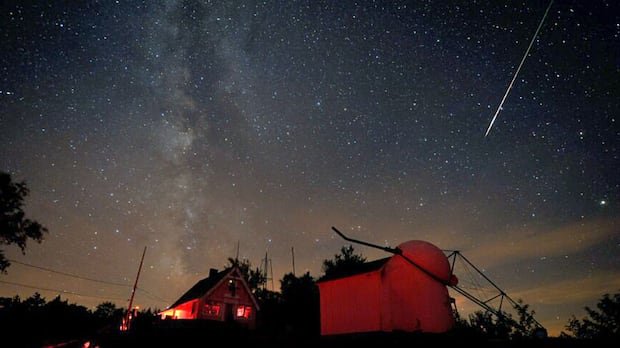

In August, skywatchers can enjoy the spectacular Perseid meteor shower, known for its bright and numerous meteors. This year, the peak of the shower coincides with a partial solar eclipse, adding to the celestial spectacle.
The Perseids are considered one of the best meteor showers due to the abundance of bright meteors and favorable viewing conditions. The peak viewing night is expected to be on August 12-13, coinciding with a new moon, providing clear skies for optimal viewing. Earth-grazers, meteors that enter the atmosphere and shoot back into space, are expected to be particularly impressive this year.
Peter Brown, a meteor astronomy expert, advises viewers to head out early to catch the Perseids, with peak activity around midnight Eastern Daylight Time. While an estimated 120 meteors per hour are possible under ideal conditions, observers may still see a dozen or more bright meteors during the peak.
The Perseid meteor shower began on July 17, gradually increasing in intensity leading up to the peak night. Meteor enthusiasts are encouraged to check the weather forecast and consider observing on nights leading up to the peak for the best viewing experience. The radiant point of the meteors lies in the Perseus constellation, though meteors can be seen streaking across the entire night sky.
Additionally, alongside the Perseids, the southern delta Aquariids, alpha Capricornids, and kappa Cygnids meteor showers are active, offering more opportunities to witness shooting stars. In the midst of these meteor showers, a partial solar eclipse will be visible on August 12 in certain regions, with Greenland, Iceland, Spain, and parts of Portugal experiencing a total eclipse.
While Canadians won’t witness the total eclipse, they can observe a partial eclipse where the moon appears to take a “bite” out of the sun. Viewers in eastern regions will see a more significant bite compared to those in western areas. Observers must use approved solar eclipse glasses to view this celestial event safely. Astronomers emphasize the eclipse as a unique opportunity to witness the interaction of Earth, moon, and sun in motion.