

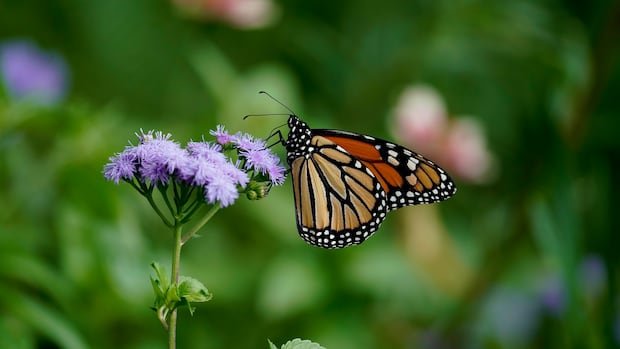

MaryAnn Lepp has observed an abundance of monarch butterflies undergoing their transformation in her garden, with as many as 20 caterpillars feeding on her swamp milkweed in just one day this week. This surge is being witnessed by numerous Canadian monarch enthusiasts, who are seeing a rise in backyard milkweed patches thriving in the wet and hot conditions across parts of the Prairie this summer.
The increase in monarch activity has sparked excitement among observers like Lepp, who is eagerly searching her garden for monarch cocoons in La Broquerie, approximately 60 kilometers southeast of Winnipeg. According to Lepp, the number of butterflies this year has noticeably surpassed previous years.
While it remains uncertain whether the surge is primarily due to favorable weather conditions, conservation experts are optimistic about the surge in caterpillars, chrysalises, and monarch butterflies, which are crucial for the federally endangered species known for their annual migration between Canada and Mexico.
Marika Olynyk, curator of the Living Prairie Museum, noted a significant rise in monarch sightings in Winnipeg this year, with a steady presence of caterpillars, chrysalises, and butterflies throughout the summer. The museum’s tall grass prairie preserve offers a variety of native plants that pollinators, including monarch butterflies, rely on for nectar.
Despite efforts by individuals like Lepp to plant milkweed and native wildflowers, these vital resources are still not as abundant or widespread as they once were due to habitat loss caused by the conversion of native grasslands to farmland. Olynyk emphasized that habitat loss remains the biggest threat to monarchs, as the destruction of tallgrass prairies has significantly impacted their populations.
In recent years, there have been calls to elevate the legal protection status of monarchs from “special concern” to “endangered,” culminating in the species receiving endangered status in 2016. The federal government followed suit in December 2023, making it illegal to harm or capture monarchs on federal lands at any developmental stage.
While there has been a positive trend in monarch numbers this year, experts caution that the population is still far below sustainable levels. Olynyk highlighted the ongoing efforts to raise awareness and protect monarchs, emphasizing the need for continued conservation initiatives.
In addition to the increase in monarch populations, there have been positive developments for the critically endangered Poweshiek skipperling butterfly. The Assiniboine Park Zoo has been actively involved in breeding and releasing Poweshiek skipperlings, with recent sightings indicating progress towards recovery for this imperiled species.
Overall, the positive trends observed in monarch and Poweshiek skipperling populations this summer are encouraging, but efforts to protect and conserve these species must continue. Zoo staff are gearing up to track monarchs’ migration south to Mexico using radio transmitters, underscoring the ongoing commitment to safeguarding these iconic butterflies and their habitats.