

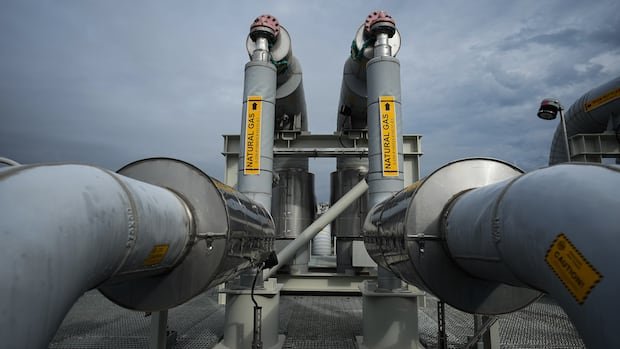

In a recent speech, Prime Minister Mark Carney emphasized the significant role of Canadian energy exports in fueling American growth, particularly highlighting the reliance on U.S.-bound natural gas shipments. This raises the question of the potential impact if Canada were to cease these exports.
While the ongoing Canada-U.S. trade tensions have not yet seen energy products like oil and natural gas used as bargaining tools, there are differing views among Canadian leaders. Alberta Premier Danielle Smith has been against such a move, while Ontario’s Doug Ford advocates for keeping all options open.
Carney pointed out that the U.S.’s trade deficit in goods is heavily influenced by its energy imports from Canada. Notably, Canada supplies a vast majority of natural gas imports (99%), electricity imports (85%), and crude oil imports (60%) to the United States. However, the actual impact on U.S. natural gas consumption is relatively small, accounting for about eight percent according to the U.S. Energy Information Administration.
Dulles Wang, director at Wood Mackenzie specializing in Americas gas and LNG, suggests that the share of Canadian natural gas in the U.S. market is even lower, around five percent. The interconnected natural gas pipelines across the Canada-U.S. border play a crucial role in supplying energy for various purposes, including heating, electricity generation, and industrial activities.
Enbridge, headquartered in Calgary, stands as North America’s largest natural gas provider, with significant cross-border operations. Wang emphasizes the importance of the specific regions where Canadian gas deliveries occur, highlighting the reliance on Canadian gas in areas like the Pacific Northwest.
The potential repercussions of halting natural gas exports to the U.S. could have severe economic implications for Canada, leading to oversupply and plummeting prices. Wang warns against such a move, noting that Canada would lose its primary customer and face adverse consequences.
To diversify its energy exports, Canada is looking to expand into non-U.S. markets, with recent LNG shipments to Asian markets from facilities like LNG Canada in Kitimat, B.C. The government is supporting projects to enhance Canada’s energy export capabilities and reduce dependence on the U.S. market.
In conclusion, any disruption in the current energy trade dynamics between Canada and the U.S. could have far-reaching consequences for both countries, underscoring the need for strategic planning and market diversification in the energy sector.