

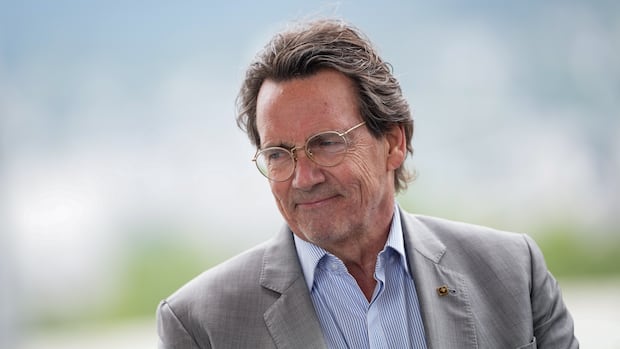

CEO Pierre Karl Péladeau of Quebecor Inc. is standing by his company’s ambitious $31-billion proposal to acquire Telus Corp., despite worries about competition within Canada’s telecommunications industry. He asserts that the prices of wireless plans are decreasing and that foreign firms are seeking to expand their presence.
“Telecom assets are crucial for our nation — this is widely recognized. Consequently, we must ensure we are on equal footing,” Péladeau stated during an interview on Rosemary Barton Live, which aired on Sunday morning.
The Montreal-based media, telecom, and entertainment firm announced on Monday that it had put forth a non-binding proposal to Telus in June to initiate discussions, and that Telus is currently evaluating an improved proposal that Quebecor submitted earlier this month.
This initiative by Quebecor arrives three years after the federal government permitted Rogers Communications to acquire Shaw Communications, stipulating that Freedom Mobile be sold to Quebecor to maintain a four-player market structure.
In a conversation with CBC’s chief political correspondent Rosemary Barton, Péladeau highlighted that his company has been managing Freedom Mobile and the Canadian market “quite effectively, and our results speak for themselves. We look forward to continuing this success with the Telus assets.”
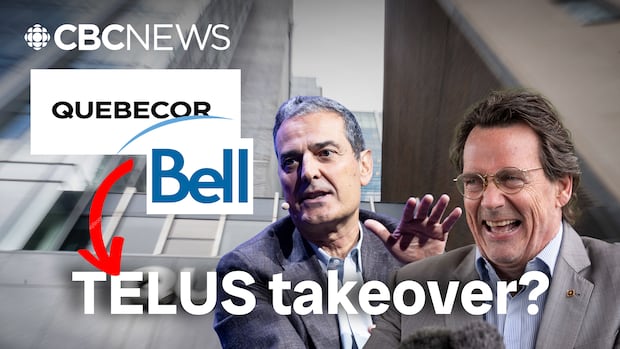
Quebecor’s $31 billion bid to acquire Telus could position it as Canada’s largest telecom provider, potentially reducing the wireless market to just three main competitors in British Columbia. The CBC’s Lien Yeung explains Telus’s resistance and the possible impact of this significant merger on your monthly phone bill.
When asked how such a merger would affect the costs of wireless services for Canadians, Péladeau pointed out that prices have continued to decline following his company’s acquisition of Freedom Mobile.
“Our profits are increasing, and our free cash flow is expanding,” he remarked. “Why would we alter a winning formula?”
As per Canada’s annual telecom report, the prices for cellular services have seen a decrease in recent years but rose again in 2025. Canada remains among the countries with the highest wireless charges compared to other developed nations.
Currently, Quebecor stands as Canada’s fourth-largest telecom entity. With a market capitalization of $14.77 billion and Telus’s $21.72 billion, this prospective acquisition could make Quebecor surpass Rogers or Bell in size.
Péladeau also positioned the proposed acquisition as a means to safeguard Canada’s sovereignty, mentioning that Elon Musk’s satellite internet service, Starlink, is already servicing segments of the Canadian market and is keen on expanding further.
“[Starlink’s] business approach is global, similar to how Netflix operated,” Péladeau remarked, noting that Netflix “decimated a Canadian industry” despite lacking a license from the Canadian Radio-television and Telecommunications Commission (CRTC).
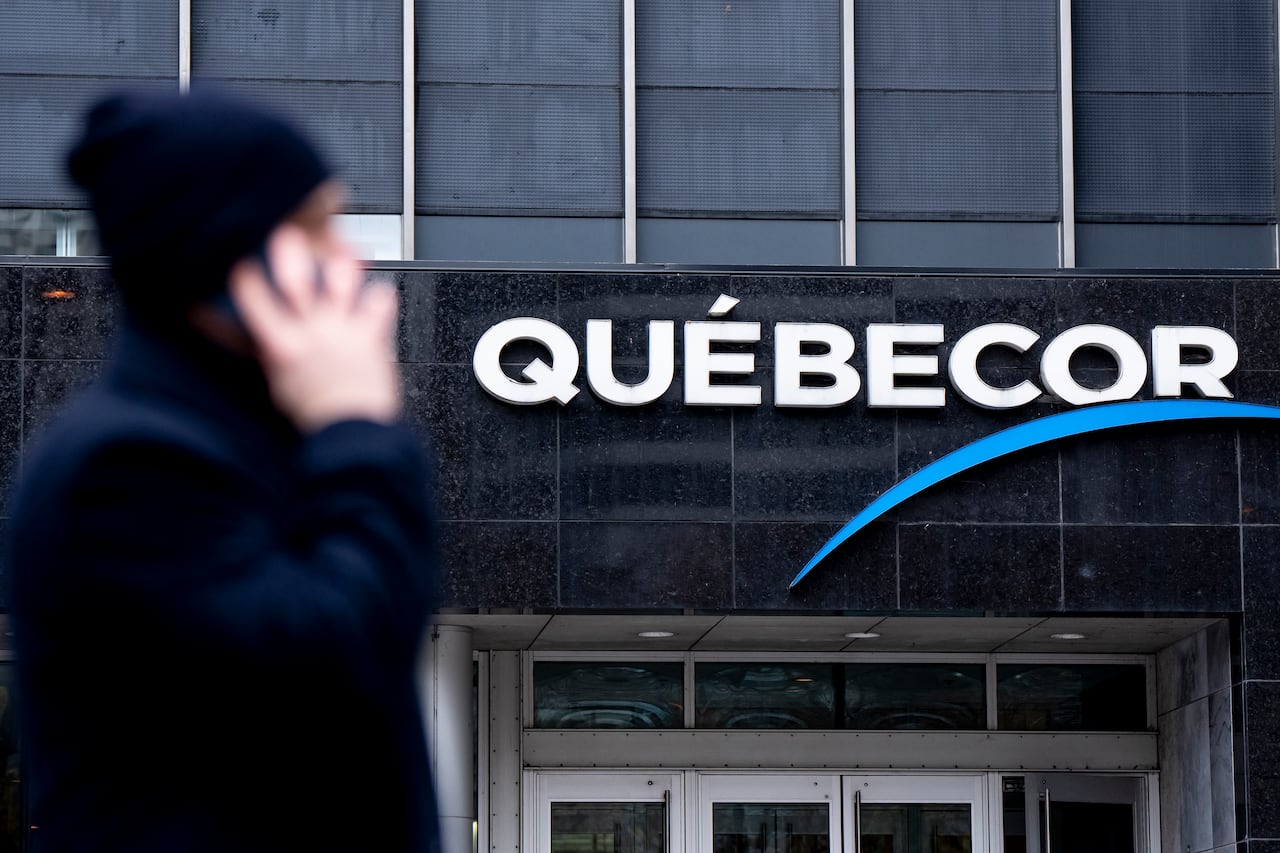
Quebecor ranks as Canada’s fourth-largest telecom company, holding a market capitalization of $14.77 billion. (Christopher Katsarov/The Canadian Press)
In response to the proposal, Telus has established a special committee to evaluate the offer and assess the potential deal’s worth. So far, the committee has identified several “significant risks,” according to John Manley, chair of Telus’s board of directors, in a statement released by the company on Monday.
Telus has also expressed concerns regarding the valuation of the company in Quebecor’s proposal.
Manley indicated that Telus will continue discussions with Quebecor, the government, and regulatory bodies concerning these issues while exploring other options.
The federal viewpoint thus far
In its press release on Monday, Quebecor acknowledged the necessity for approval from Canada’s Competition Bureau, along with other entities such as the CRTC and Innovation, Science and Economic Development Canada.
Earlier this week, Prime Minister Mark Carney stated that increased competition, reduced prices, and improved services would be crucial factors in any decision regarding the telecommunications sector.

NDP Leader Avi Lewis discusses Quebecor’s $31 billion bid to acquire Telus, urging the federal Competition Bureau to intervene, citing concerns over increased consumer costs and possible layoffs.
Carney refrained from commenting specifically on Quebecor’s proposal but mentioned that, under certain conditions and depending on market dynamics, an oligopoly could foster more competition with fewer players. He did not provide further details.
Péladeau expressed his belief that few would contest Carney’s statements, pointing out that even with three Canadian firms, competition would still exist from entities like Starlink.
On Friday, Conservative Leader Pierre Poilievre stated that his party has yet to review the proposal but will analyze it based on the principle of reducing prices for consumers.
Poilievre criticized Carney’s observations, asserting that he has never encountered “any economist anywhere in the world claiming that oligopolies ultimately reduce prices…. Once more, Mr. Carney prioritizes corporate interests over those of consumers.”
NDP Leader Avi Lewis has called on the Competition Bureau to prevent the sale, arguing it would lead to increased consumer costs and job losses.
“We are already facing some of the steepest cellphone prices globally,” he remarked. “It seems evident to most individuals grappling with this cost-of-living crisis that this is just another instance of large corporations swallowing up another company.”