


An overloaded ferry tragically capsized on Lake Kariba in Zimbabwe, resulting in the loss of at least 15 lives, while 27 individuals remain missing, according to the national disaster management agency. The agency reported that 77 people were successfully rescued and transported to an island on the lake.
Zimbabwe’s Civil Protection Unit indicated that it could verify the presence of 114 adult passengers based on ticket sales records, but there might have been additional unaccounted-for children below the ticketing age. Additionally, the ferry carried five crew members, exceeding its designated capacity of 90 individuals.
Mutsa Murombedzi, a local Member of Parliament, shared a video capturing individuals on the shore waving at the ferry before it embarked on its ill-fated journey. The ferry, known as the RIDA boat named Mbuya Nehanda, served as a vital mode of transport for rural communities traveling from Kariba to the town of Kariba, a journey that typically took around five hours to complete across Lake Kariba.
Concerns were raised by onlookers on the shore about the ferry’s ability to navigate through rough waves on the lake, as depicted in the video. Zimbabwean authorities initiated a rescue operation following the incident, with footage from the state broadcaster, ZBC, showing speedboats approaching the overturned vessel while a helicopter provided aerial support.
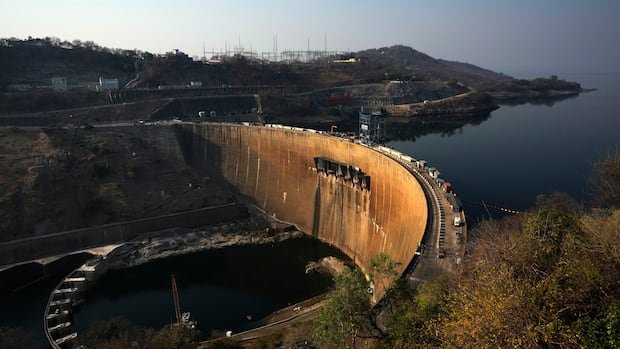
Lake Kariba, situated on the border between Zimbabwe and Zambia in southern Africa, stands as the largest man-made lake globally in terms of volume. Created in the late 1950s and early 1960s through the construction of a dam wall to impound the Zambezi River, the lake spans over 200 kilometers in length and up to 40 kilometers in width at certain points. The lake is jointly shared by Zimbabwe and Zambia, with the official border intersecting through the center of the expansive water body.