

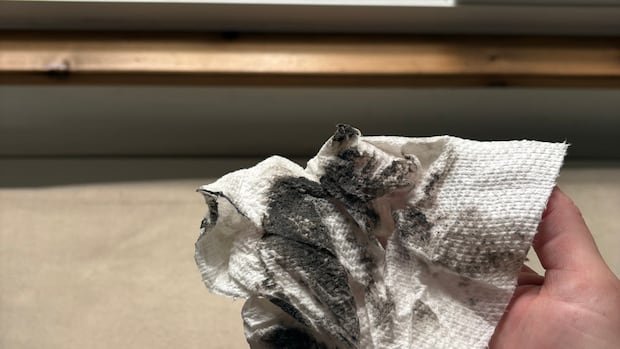

A group of scientists from Hamilton have uncovered insights into the issue of soot deposition in neighborhoods close to the city’s industrial zone. Complaints from residents about a dirty, black residue on their properties have persisted for many years. The problem resurfaced in early July with what some described as the most significant fallout in recent recollection.
Sarah Styler, an environmental chemistry associate professor at McMaster University, along with Grace Yao, a PhD candidate under Styler’s supervision, are part of the research project titled “What’s the Grime?” Their study involved gathering samples across the city in 2024 and 2025, revealing that the soot contains harmful substances consistent with coal burning. Furthermore, elevated levels of dust and polycyclic aromatic hydrocarbons (PAHs) were detected near the industrial area in northeast Hamilton.
Collaborating with Environment Hamilton, Styler conducted the study with a $15,000 grant awarded by the university in 2024. Both Styler and Yao, residing in east Hamilton and Corktown respectively, have encountered the soot firsthand. The research team utilized sampling kits to collect soot from 50 volunteers’ homes across the city, analyzing the samples at four-month intervals.
Styler mentioned that more dust falls closer to the industrial sector, with a higher concentration of toxic compounds in the vicinity. The team observed that PAH levels were more pronounced during winter compared to summer. While focusing on 13 different PAHs, Styler highlighted that other toxic elements may be present in the grime, describing it as a viscous mess.
Due to resource constraints, the study couldn’t explore all components of the grime, potentially leaving room for other contributors to the fallout. Styler emphasized the importance of continual monitoring and enhanced analytical capabilities to identify the specific industrial sources generating the PAHs.
Styler suggested that the findings are likely unsurprising to those directly impacted by the fallout, as the substance affecting residents near coke plants is traced back to industrial emissions. However, locals have expressed frustration over the lack of information provided by official channels.
The team’s research contradicts the notion that the soot primarily consists of road dust. Styler stressed that their findings align with the community’s long-standing claims that the soot originates as an industrial byproduct. The researchers plan to present their results at a community meeting on Aug. 20, with further insights to be shared following peer review of their manuscript. They aim to expand the study to 200 volunteers, explore additional compounds in the grime, and investigate effective cleaning methods.