

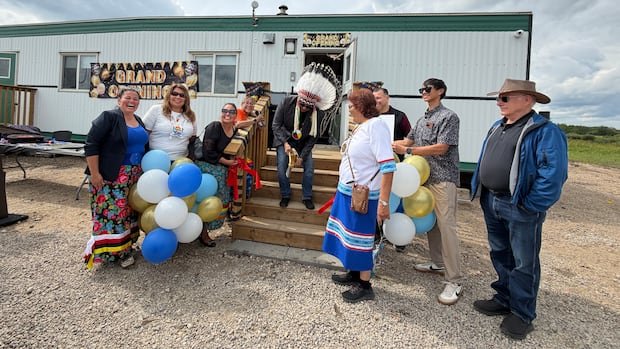

A newly established women’s shelter in northeastern Alberta is providing vital support to vulnerable members of a First Nation community, emphasizing connection to their culture and community.
Cold Lake First Nations (CLFN), situated approximately 280 kilometers northeast of Edmonton, celebrated the grand opening of their inaugural women’s shelter on Monday. Women began moving into the shelter the following day.
Each room in the shelter is uniquely decorated and equipped with a bed, care packages, towels, a desk, and other essentials to accommodate women seeking a safe space to stay. Terry Martial, the CEO of the Horelyu Dene Tsâedi Kue Society, a non-profit organization offering community wellness, cultural support, and social programs for CLFN, expressed the shelter’s significance in providing a crucial resource for women in need.
Martial highlighted the urgency to address local women’s homelessness, underscoring the shelter’s role in protecting and supporting women, whom she described as the foundation of any society. The facility features seven bedrooms, a communal kitchen, and living area furnished with books, games, and yoga equipment, as shared by shelter manager Tempest Lapatac.
Programming at the shelter, including healing circles, cultural teachings, language classes, gardening, and meal planning, will be facilitated by staff, elders, and community members. Lapatac emphasized the shelter’s aim to offer a homely environment while encouraging residents to maintain independence by taking care of daily tasks themselves.
Residents are allowed a 30-day stay at the shelter, during which they are expected to work on case management plans and can access services like addiction counseling, mental health support, education opportunities, and employment training. The shelter initiative stemmed from a donated trailer that was retrofitted for this purpose, as highlighted by CLFN Chief Kelsey Jacko.
Jacko stressed the importance of providing a safe haven where women can stay connected to their cultural roots and families. The community-driven effort to establish the shelter was propelled by the collective desire to support struggling women within the community, as shared by CLFN councillor Jacinta Janvier.
Ultimately, the shelter stands not only as a physical refuge but as a beacon of hope and a pathway to a better quality of life for those who seek its assistance.