

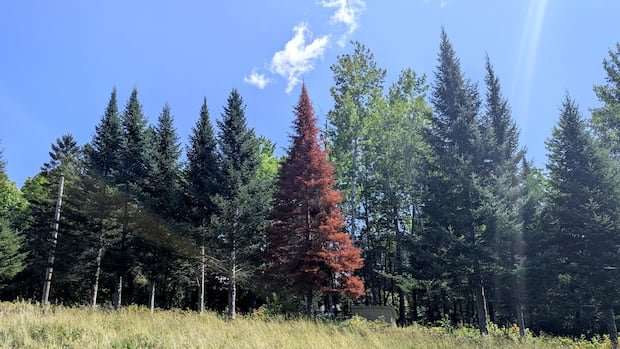

Balsam fir trees in New Brunswick are exhibiting signs of stress, with many turning red and dying following a severe drought last summer. Concerns are mounting about the future of these iconic trees in the province. Professor Anthony Taylor, a forestry researcher at the University of New Brunswick, has been closely monitoring the situation. He notes that the once vibrant evergreen trees, often sought after for Christmas decorations, are gradually succumbing to the effects of the prolonged dry spell.
Taylor, who has been studying the impact of climate change on New Brunswick’s forests for an extended period, highlights the correlation between hot, arid summers and balsam fir die-offs. He explains that the warm and dry conditions, such as those experienced during the recent drought, hinder the growth of balsam firs significantly. This phenomenon has been observed in the aftermath of previous dry summers in 1986 and 2018.
The drought triggers an early halt to the photosynthesis process in the trees, leading to a lack of essential energy reserves needed for growth and defense mechanisms. Taylor emphasizes that this puts the balsam firs at a disadvantage, making them more susceptible to external stressors like pests or diseases, ultimately increasing the risk of widespread die-off.
Moreover, the shallow root system of balsam firs exacerbates their struggle to access sufficient water during periods of low precipitation. Peter McKeil, a woodlot owner in New Brunswick, has witnessed firsthand the detrimental effects of the drought on his trees. He describes how the firs on his property are progressively turning red from the lower branches upwards, with new areas of damage emerging regularly. McKeil estimates that he has already lost around 100 trees and is adapting his harvesting practices to salvage the remaining fir before further losses occur.
McKeil believes that with the escalating challenges posed by climate change, the long-term survival of balsam firs, especially in southern New Brunswick, is uncertain. He underscores the urgent need for climate action to address the underlying issues contributing to the decline of these trees. Taylor echoes this sentiment, emphasizing that the visible impact on the balsam firs serves as a stark reminder of the pressing need to transition away from fossil fuels and adopt sustainable forest management practices to combat climate change effectively.
The changing landscape of New Brunswick’s forests, marked by the distress of the balsam firs, serves as a tangible indicator of the broader implications of climate change. Taylor hopes that his research findings will prompt meaningful action and policy changes to mitigate the adverse effects of environmental degradation on the province’s iconic tree species.