

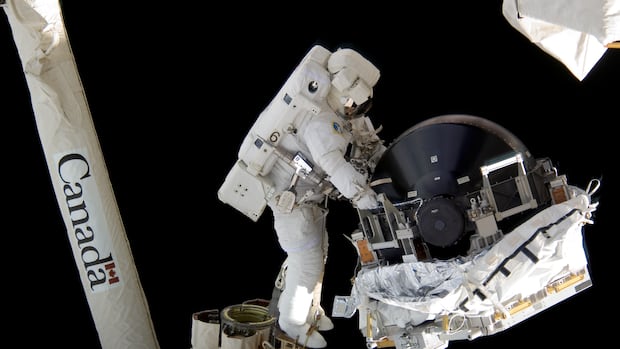

Located approximately 400 kilometers above the Earth’s surface and traveling at around 7.66 kilometers per second, the International Space Station is currently hosting Canadian Space Agency astronaut Joshua Kutryk as he performs tasks outside the station.
Together with NASA astronaut Anil Menon, Kutryk is undertaking one of two planned spacewalks during which they will install eight new solar arrays. Following the second spacewalk scheduled for November 5, these arrays will enhance the station’s power output from 160 kilowatts to 215 kilowatts.
Canada is significantly contributing to this operation.
Jenni Gibbons, a CSA astronaut, is acting as capcom—short for capsule communicator—from the Johnson Space Center in Houston.
Gibbons has previously filled the capcom role, including during the Artemis II mission, where Canadian astronaut Jeremy Hansen orbited the moon alongside three NASA astronauts.
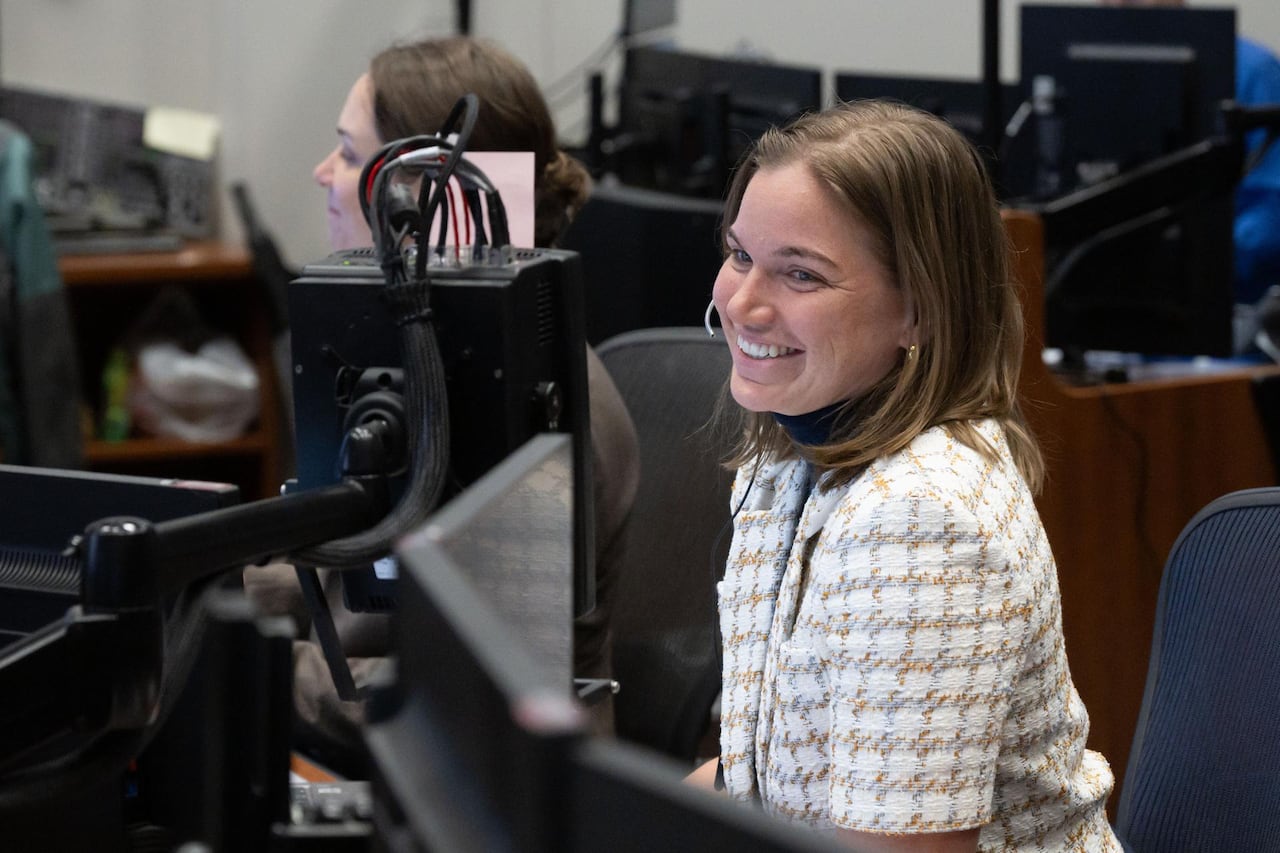
Canadian Space Agency astronaut and backup Artemis II crew member Jenni Gibbons served as capsule communicator (capcom) during an Orion manual piloting demonstration on the fourth day of the mission. (Bill Stafford/NASA)
The Canadarm2, a robotic arm integral to the ISS’s construction, is also playing a vital role by relocating supplies and capturing cargo spacecraft.
Earlier last week, it successfully detached the International Space Station Roll Out Solar Arrays (IROSAs) from a SpaceX Dragon cargo vehicle and positioned them onto the station’s mobile base.
-
Joshua Kutryk’s launch to the ISS is another example of the important role Canada plays in space exploration
-
Canadian astronaut Joshua Kutryk says he’s ‘having a blast’ on the International Space Station
Additionally, the Canadian Space Agency is actively engaged in its Robotics Mission Control Centre located in Longueuil, Quebec.
During the spacewalk scheduled for Thursday, Canadarm2 will assist Kutryk and Menon in maneuvering each solar array from the mobile base to their designated locations. While Kutryk will not be onboard the arm, Menon will be.
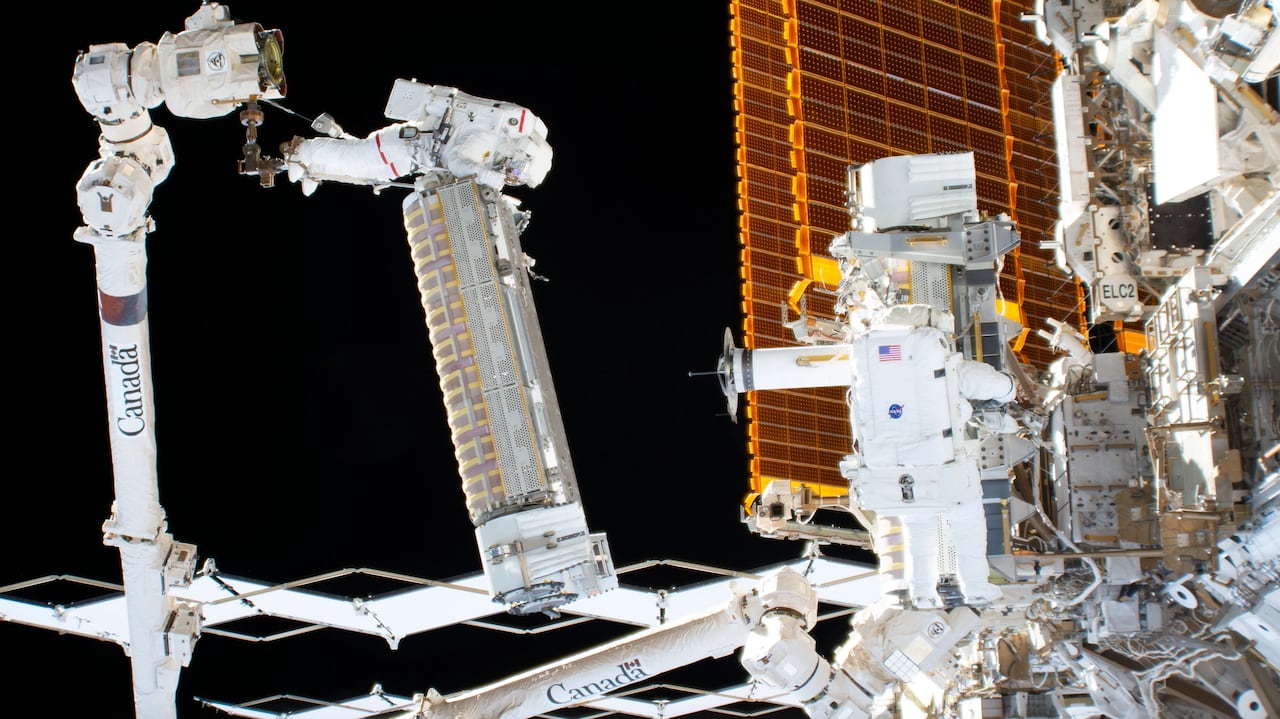
NASA astronauts perform a spacewalk to install an International Space Station Roll Out Solar Array with the assistance of the Canadarm2 robotic arm in 2022. (NASA)
Mathieu Caron, director of the CSA’s astronaut office, stated that the entire spacewalk exemplifies Canada’s capabilities in space.
“This signifies Canada’s acknowledgment for the crucial role we’ve played in this international collaboration,” he remarked, emphasizing that spacewalks and capcom shifts are significant responsibilities not assigned to just anyone.
“Without the assistance of Canadian robotics, this spacewalk could not be achieved.”
A Challenging Endeavor
“It’s extremely perilous, yet we are thoroughly prepared,” noted CSA astronaut David Saint-Jaques, the last Canadian to execute a spacewalk in 2019.
“This is a remarkable demonstration of teamwork, and it’s an incredible experience to essentially be your own small satellite orbiting Earth.”
He also pointed out that a spacesuit is much more than mere attire.
“A spacesuit isn’t just clothing; it’s not like any winter gear,” he explained. “It’s a compact spacecraft designed to fit a human form that you must operate.”
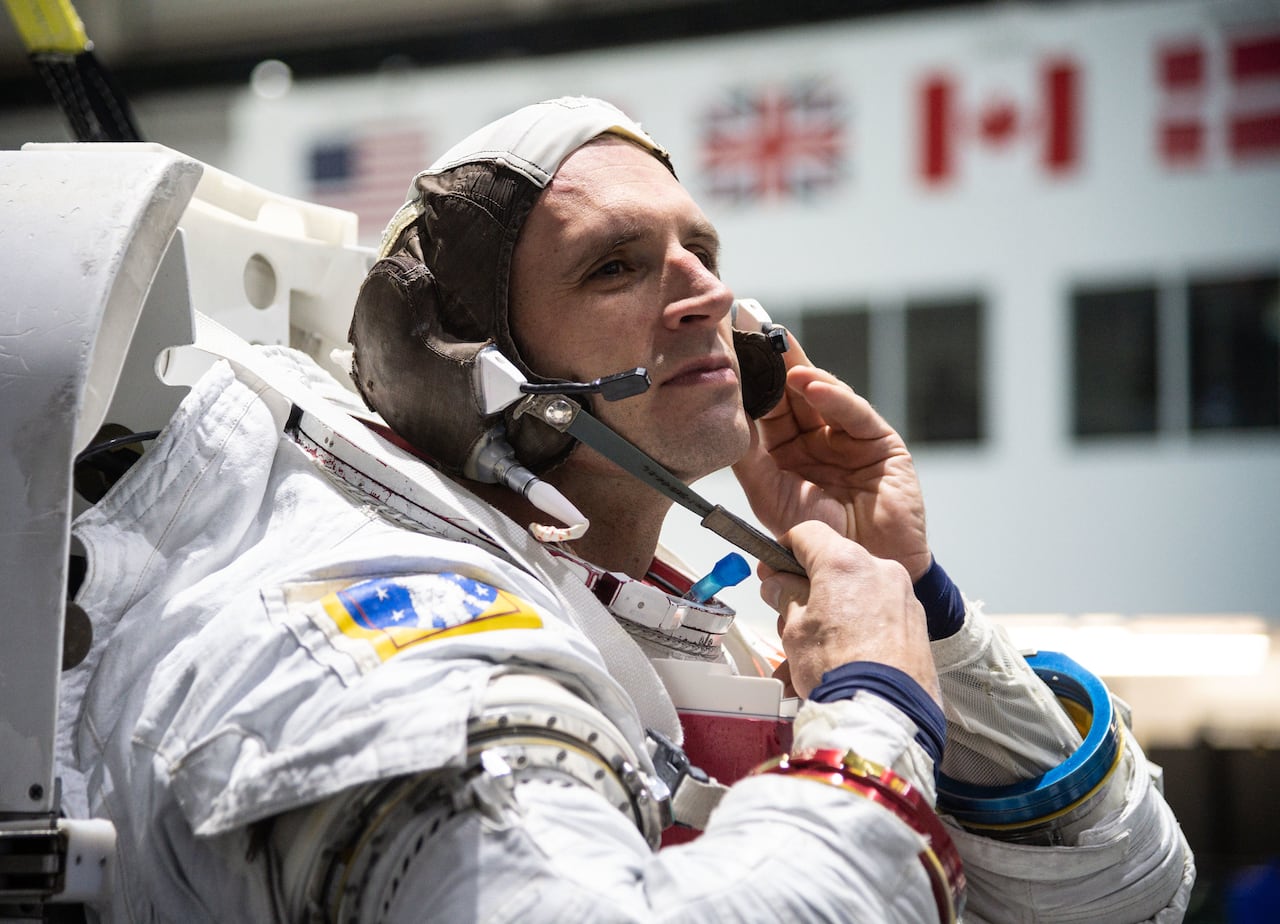
CSA astronaut Joshua Kutryk takes part in a spacewalk training session at Johnson Space Center in Houston. (NASA)
In 2013, there was a near incident involving European Space Agency astronaut Luca Parmitano, whose helmet began to fill with water. Fortunately, he managed to return to the ISS safely shortly thereafter.
However, Kutryk has undergone extensive training for this spacewalk, with crew members completing suit checks over the past week.
Although the spacewalk, lasting approximately seven hours, may seem intimidating, Kutryk will witness the world—and the universe—in a manner few on Earth ever experience.
“For many astronauts, a spacewalk represents the pinnacle of their career,” Saint-Jaques noted, adding that even recalling his own spacewalk sends chills down his spine.
He conveyed a message to Kutryk: “Josh, I am confident you will perform excellently. You’ve got this.”
Saint-Jaques described Kutryk as a “stellar individual” who has memorized the procedures through extensive practice. He indicated that the primary challenge will be “to take a moment to observe, to gaze at Earth, and to let it all resonate.”