

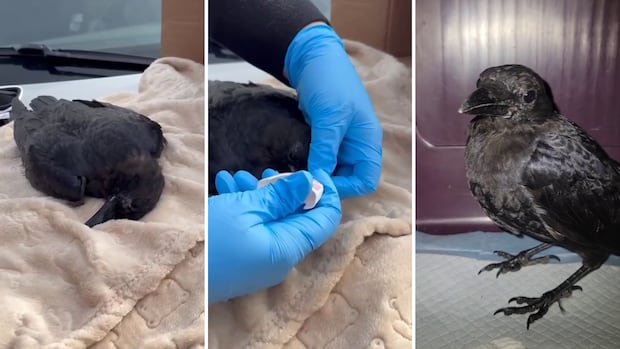

An organization focused on animal welfare in downtown Prince George, B.C., has been providing nasal naloxone to crows suspected of ingesting harmful substances left accessible outdoors. The Good Caws Crow Rescue Society (GCCRS) has released videos demonstrating their volunteers administering nasal naloxone to unresponsive crows, which then become alert and capable of flying again. The crows receiving assistance are concentrated in an area known for illicit drug activity, according to Dayna Slater of GCCRS.
Slater expressed concern over the increasing number of suspected drug overdoses among crows this year, noting a significant rise compared to previous years. Symptoms observed in affected crows include closed eyes, slowed heartbeats, and unresponsiveness, with some exhibiting brown liquid foam from their beaks. While some crows have unfortunately perished, most have been successfully released after recovering within a day.
Dr. Kaitlyn Liukaitis from the Birchwood Veterinary Clinic, who has treated some of the affected crows, confirmed that their symptoms align with those of a toxic drug overdose. She mentioned that using naloxone to counteract the symptoms is a common practice in veterinary care for various animals. The ongoing increase in drug toxicity in British Columbia has prompted public warnings, with a surge in overdose calls in Prince George, leading to a heightened state of emergency with sirens blaring downtown where the affected crows are discovered.
Outreach groups emphasize the importance of harm reduction measures and safe consumption sites to address addiction-related challenges. Slater collaborates with harm reduction organizations, leveraging their expertise in identifying affected crows and providing expired naloxone kits for volunteer use. She stressed that the crows are unintentional victims of larger societal issues, reflecting the environment they inhabit.
To address the issue, Slater proposes the implementation of covered garbage cans to prevent crows from accessing harmful materials mixed in with waste. She highlighted the risk posed to birds by minute quantities of toxic substances and the need for proactive measures to protect wildlife from inadvertent harm.