

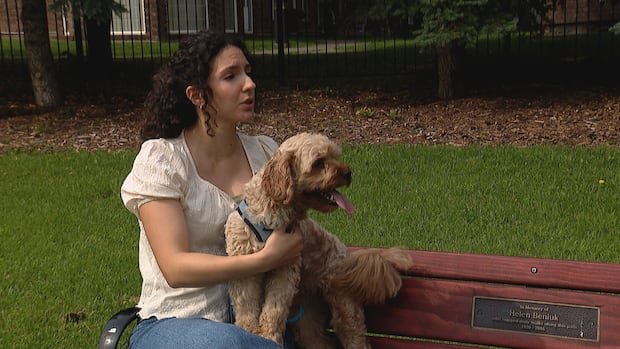

Valeria Vecchio was taking her daily stroll with her dog Clifford in a downtown Edmonton park when she noticed that something was amiss with her furry companion. Clifford, a one-year-old mix of poodle and Cavalier King Charles spaniel, suddenly became lethargic, had pale gums and tongue, and started vomiting. Concerned, Vecchio carried him home from Railtown Park, located just north of the High Level Bridge on 110th Street, suspecting he might have ingested something harmful.
As Clifford’s condition worsened, with shallow breathing and a slowing heart rate, Vecchio hurriedly called an Uber to rush him to the vet. During the ride, she even resorted to gently shaking his head to keep him alert. At the animal hospital, the vet suggested that Clifford might be suffering from opioid toxicity, and promptly administered naloxone, leading to his full recovery.
Vecchio, familiar with the prevalence of public drug use in downtown Edmonton, wasn’t surprised by the vet’s suspicions. Dr. Jami Frederick, president of the Alberta Veterinary Medical Association, emphasized the increasing occurrence of opioid ingestion among pets in the city, particularly during the summer months when people are out with their pets more frequently.
To address this growing concern, Dr. Frederick recommended that pet owners carry naloxone kits when in public areas and seek immediate veterinary care if opioid toxicity is suspected. She highlighted the importance of monitoring pets closely and reiterated the necessity of professional medical attention in such cases. The City of Edmonton, responding to the incident, stated its routine litter removal practices but couldn’t confirm if the incident was formally reported.
Vecchio expressed her intention to be more cautious about where she and Clifford walk, avoiding high-risk areas for drug exposure. She emphasized the significance of closely supervising Clifford’s interactions and vowed to prioritize his safety, acknowledging his immense importance in her life.