

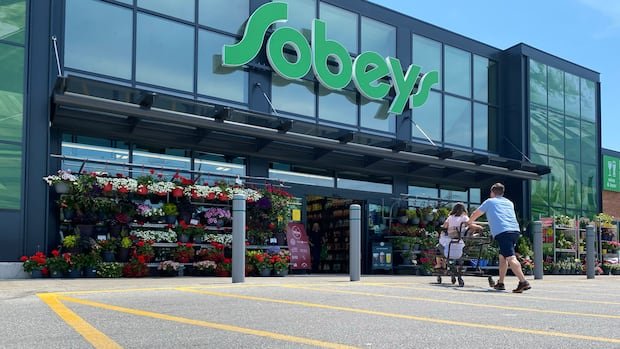

Canada’s Competition Bureau has finalized an agreement with Empire, the parent company of Sobey’s, to restrict or cease the use of property controls, following the discovery of anti-competitive practices. Property controls, such as exclusivity clauses and restrictive covenants, limit rival grocery stores from setting up nearby and can also restrict the sale of food items in adjacent retail establishments. Empire, the owner of several grocery chains including Sobeys, Farm Boy, and Safeway, had been urged by consumer advocates to eliminate these controls.
The Competition Bureau’s scrutiny of property controls in the grocery sector stemmed from an investigation initiated in 2024 involving major players like Loblaw and Sobeys. Anthony Durocher, the acting senior deputy commissioner of the Competition Bureau, explained that Loblaw had already committed to reducing its use of property controls, and now Sobey’s has also agreed to comply.
Economist Jim Stanford highlighted the significance of this agreement, indicating that it signals a victory for consumers and underscores the incorrectness of such practices. The probe into property controls was prompted by concerns over escalating grocery prices, with the bureau aiming to address these issues to benefit consumers.
The deal reached with Empire requires the company to refrain from imposing new or existing restrictive covenants while allowing limited use of exclusivity clauses. Although exclusivity clauses can still be employed in specific circumstances, the bureau will evaluate each case individually. The agreement aims to foster a more competitive market environment, enabling easier entry for new grocery businesses and fostering innovation.
Empire is the second-largest grocery network in Canada, trailing behind George Weston Limited. Loblaws, part of George Weston Limited, had previously committed to reducing the enforcement of restrictive covenants and exclusivity clauses. The ongoing efforts by the Competition Bureau to regulate property controls are intended to promote fair competition and lower grocery prices for consumers.