

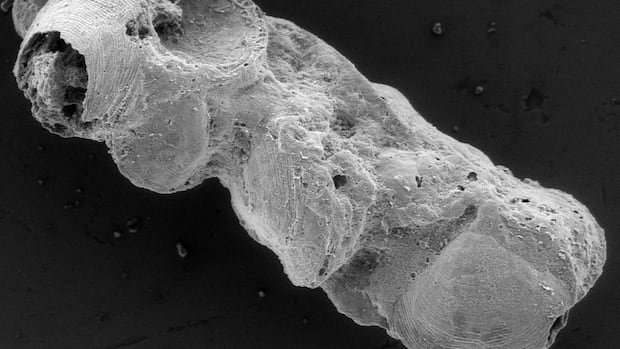

Long before the era of dinosaurs, a burst of diversity led to the appearance of early ancestors of modern animals and an increase in fecal matter. A recent study sheds light on the significance of analyzing coprolites, or fossilized feces, in understanding the ecosystems of ancient Earth and their relevance to present-day nutrient cycles and animal interactions.
The research, featured in the journal Trends in Evolution & Ecology, focused on examining fecal fossils dating back to the Cambrian period, approximately 540 million years ago. By studying feces from ancient worms, invertebrates, and mollusk-like creatures, scientists concluded that fecal matter played a crucial role in enhancing the habitability of deep water ecosystems and increasing nutrient availability during that period, long before the existence of dinosaurs.
The abundance of feces during the Cambrian period highlighted in the study provides valuable insights into the origins of contemporary ocean ecosystems. Julien Kimmig, co-author of the paper and head of the paleontology division at the Karlsruhe Natural History Museum in Germany, emphasized the importance of recognizing the impact of fecal matter on both past and present ecosystems and evolutionary processes.
Analyzing coprolites, which are fossilized fecal remains mineralized in rock, offers paleontologists key information not only about ancient animal species but also about the functioning of past ecosystems. Through the examination of hundreds of coprolites from various global deposits, researchers identified fecal remnants from different organisms such as burrowing worms, arthropods, brachiopods, and hyoliths, resembling cone-shaped mussels. These findings provide clues not only about evolutionary relationships and dietary habits but also about the ecological changes that occurred during the Cambrian Explosion.
The study underscores the importance of comprehending how past ecosystems adapted to environmental variations, which can offer valuable insights into predicting future ecological scenarios. By delving into coprolite analysis, researchers can gain a deeper understanding of the intricate interactions within ancient ecosystems and apply this knowledge to anticipate potential ecological shifts in the future.