

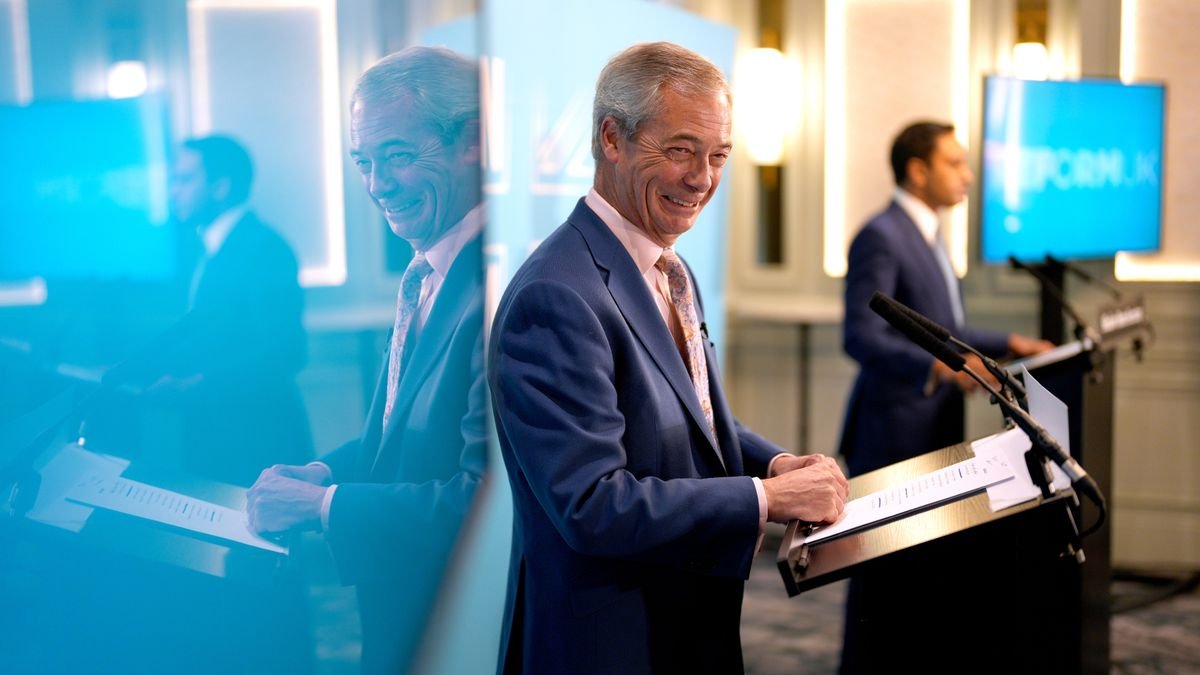

Reform’s success in the upcoming general election hinges on maintaining public outrage over immigration issues. Zia Yusuf, a key figure in Nigel Farage’s camp, shoulders significant responsibility in shaping the party’s stance on this contentious topic.
Yusuf recently made bold declarations at Dover, a symbolic location for migrant arrivals, asserting a tough stance on immigration. He proposed a strategy involving the mass deportation of thousands of migrants, even those with legal status, with plans to utilize an RAF Voyager aircraft for transport, drawing parallels to controversial tactics seen in the US under the Trump administration.
Reform’s agenda also includes abolishing Indefinite Leave to Remain (ILR), putting even long-term residents at risk. While Yusuf defended these proposals as being rooted in Christian principles, his justifications faced criticism for being harsh and authoritarian, particularly from Christian leaders who questioned the alignment of these policies with true Christian values.
Despite claiming a connection between Reform’s agenda and Christian heritage, Yusuf faced opposition from prominent Christian figures, such as the Archbishop of York and the Bishop of Oxford, who condemned the party’s deportation plans and lack of compassion. The clash between Reform’s policies and the values advocated by Christian leaders, including calls to lift the two-child benefit cap to alleviate child poverty, highlights a significant ideological divide.
When questioned about the discrepancy between Reform’s professed Christian values and the criticisms from Christian leaders, Farage dismissively accused the Church of England of straying from its true purpose. This response garnered support from Reform followers but underscored the potential for discord between the party and religious leaders if Reform continues to pursue hard-right, divisive policies reminiscent of those embraced by Donald Trump.
In light of these developments, a government led by Farage and Reform could face increasing opposition from religious authorities, despite their claims of upholding Christian values.