

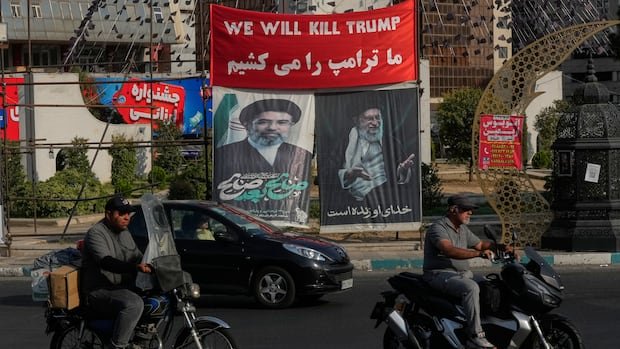

A high-ranking advisor from Iran’s Islamic Revolutionary Guard Corps (IRGC) has mentioned that Iranian officials have observed a perceived weakness in the American military since the U.S. and Israel initiated an attack on Iran earlier this year. Talks to end the conflict have hit a standstill.
Brig.-Gen. Mohammad Reza Naqdi, in a rare interview with Western media, emphasized that Iran has not yet achieved its ultimate goal in the war when asked about the current status of the conflict. Naqdi, who serves as the supreme adviser to the IRGC’s commander-in-chief, expressed confidence in Iran’s victories thus far and its future success.
An interim agreement between the U.S. and Iran to cease hostilities, reached in mid-June, is approaching its expiration date. Naqdi’s remarks come following a breakdown in the ceasefire, leading to exchanges of strikes between the U.S. and Iran before a temporary pause.
Naqdi highlighted the importance of the war experience gained and emphasized that the prolonged conflict has provided valuable insights on how to combat the American military effectively. He noted a shift in perception regarding the strength of the U.S. military.
President Donald Trump reaffirmed on Wednesday that the U.S. maintains control over the Strait of Hormuz, underscoring the strategic significance of the region. Amid the ongoing conflict in the Persian Gulf, Trump has oscillated between threats of escalation and optimism about potential peace agreements.
In parallel efforts, Pakistan continues its diplomatic initiatives to revive negotiations between Iran and the U.S. Foreign Minister Ishaq Dar engaged with Iranian Ambassador Reza Amiri Moghadam in Islamabad, following Interior Minister Mohsin Naqvi’s recent talks in Tehran. Pakistan remains committed to the peace process and is open to extending deadlines to facilitate further discussions.
Discussions have stalled primarily over Iran’s control of the vital Strait of Hormuz, a critical waterway for global oil trade. Disagreements persist regarding the fulfillment of commitments under the June agreement, with the U.S. accusing Iran of non-compliance while Tehran asserts that Washington has failed to honor its obligations.
The conflict has resulted in significant casualties, primarily in Iran and Lebanon. Iran has targeted U.S. assets and infrastructure in various countries, including Oman, Jordan, Kuwait, Israel, the United Arab Emirates, and Saudi Arabia.
The June interim ceasefire agreement outlined a timeframe for finalizing a comprehensive deal to address Tehran’s nuclear program and lift U.S. sanctions. Recent statements from both Iran and the U.S. indicate escalating tensions, with Iran’s top security official emphasizing the closure of the Strait of Hormuz until specific conditions are met and Trump demanding compensation from Iran for past conflicts and incidents.