

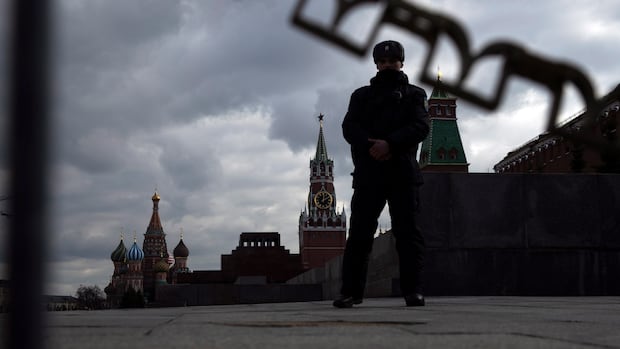

This summer can be characterized as a period of anxiety and hostility in Eastern Europe, with increasing indications that Russia might be poised to further challenge NATO’s unity in an attempt to undermine it.
Since the spring, Poland and Romania have experienced a number of Russian drone incursions and at least one missile attack.
Speculation about a potential Russian incursion was heightened by the unexpected visit of the CIA director to Moscow last week.
What troubles officials in Poland and the Baltic nations is not the imminent crossing of Russian armored divisions into their territories.
Rather, the concern lies in Moscow possibly believing it can execute a strategically ambiguous, minor act of aggression—sufficiently alarming or destabilizing for NATO, yet small and deniable enough to complicate the political invocation of Article 5, NATO’s collective defense clause.
In late July, a Russian cruise missile impacted Poland’s Lublin province after penetrating deep into Polish territory during a significant strike on Ukraine. Additionally, several drones have approached or tested Polish airspace in the weeks following.
A defense analyst specializing in Russian military operations and politics remarked that the conflict in Eastern Europe is nearing a pivotal juncture, where the Kremlin may conclude that the only way to defeat Ukraine is to politically fracture NATO.
“There is frustration over the inability to break Ukrainian armed forces and to defeat Ukrainians in the field,” stated Withold Rodkiewicz, a security specialist at the Center for East European Studies at the University of Warsaw.
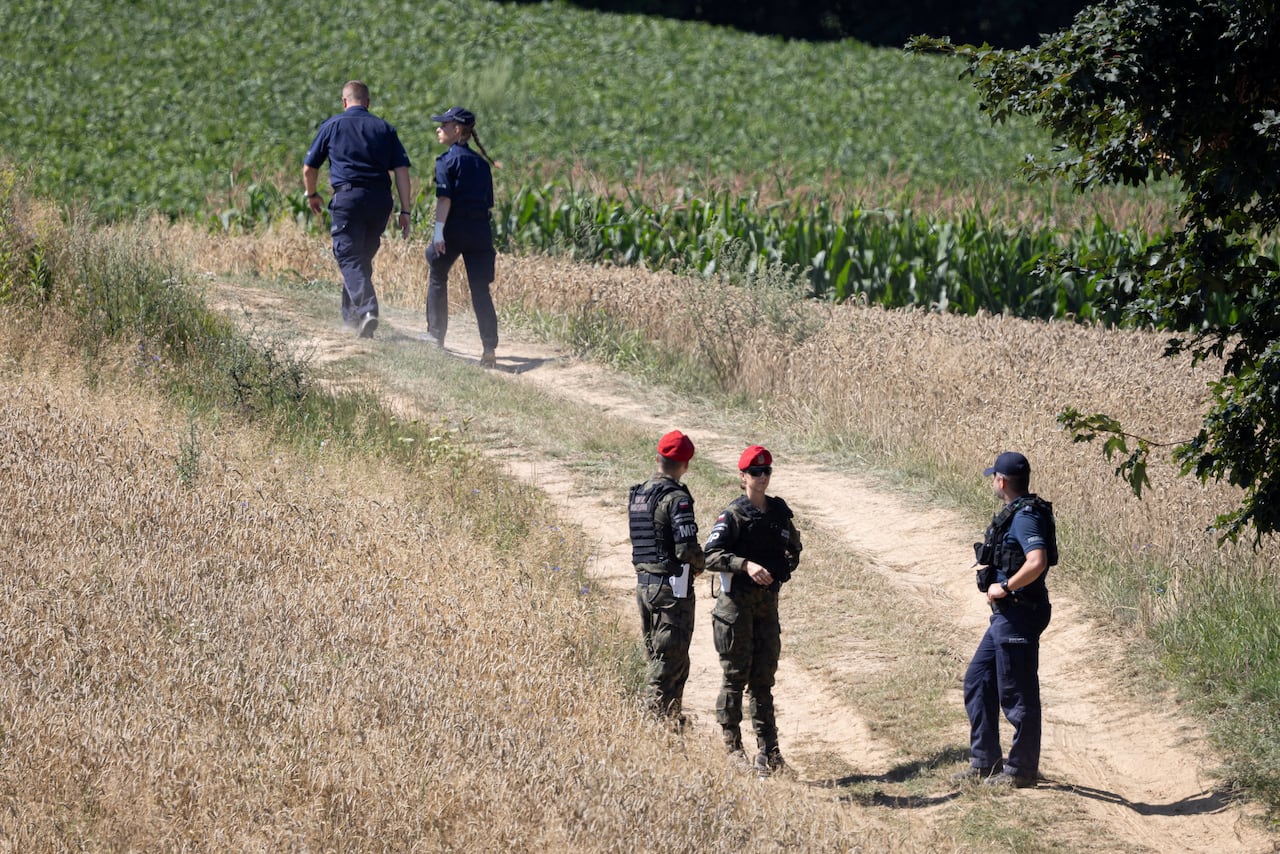
Military and police personnel at the site where a suspected Russian missile fell after violating Polish airspace in a field near Lublin, Poland, on July 30. (Agencja Wyborcza.pl via REUTERS)
According to Rodkiewicz, the Russian “elite” are aware they are not winning, and Ukraine’s increasingly effective strikes on oil and commercial infrastructures pose a threat to the Kremlin’s power stability.
“The analysis circulating in Moscow suggests that the primary reason Ukrainians can resist is due to Western supplies,” he stated, noting that the Kremlin will not be satisfied without a decisive victory in Ukraine.
“They are not searching for a way out. They are not looking for an off-ramp,” he elaborated. “When considering their next steps, escalation appears to be an obvious choice.”
Rodkiewicz anticipates that the timing will be favorable for Moscow around September, either before or after the parliamentary elections in Russia.
While there is growing evidence of Russian risk-taking, there is no consensus that President Vladimir Putin has made a decision to initiate a conventional war with NATO. For instance, Estonia’s foreign intelligence service still assesses that Russia does not currently intend to launch a military attack on a NATO member state in the upcoming year.
Do I think they’ll do something that is so clearly aimed at shaking NATO decision-making and political cohesion? Absolutely.Kerry Buck, Canada’s former ambassador to NATO
Simultaneously, throughout the summer, warnings from the U.S., Poland, and Baltic nations regarding potential provocations have become significantly more detailed.
In late June and July, reports surfaced indicating that Western intelligence agencies had detected signs that Russia might be preparing some form of action against Poland or the Baltic states, aimed specifically at testing NATO’s unity.
The Guardian reported that intelligence received by Latvia suggested a possible military provocation from Russia, and subsequent reports indicated that the United States had alerted Poland about the likelihood of an armed incident occurring on its territory.
By early August, the warnings were even more pronounced. U.S. intelligence reportedly informed Poland and the Baltic nations that Putin could be ready to authorize provocative actions against NATO while the conflict in Ukraine is still ongoing, rather than waiting for Russia to rebuild its conventional military capabilities after the war.
This marks a significant shift in the dialogue regarding threats.
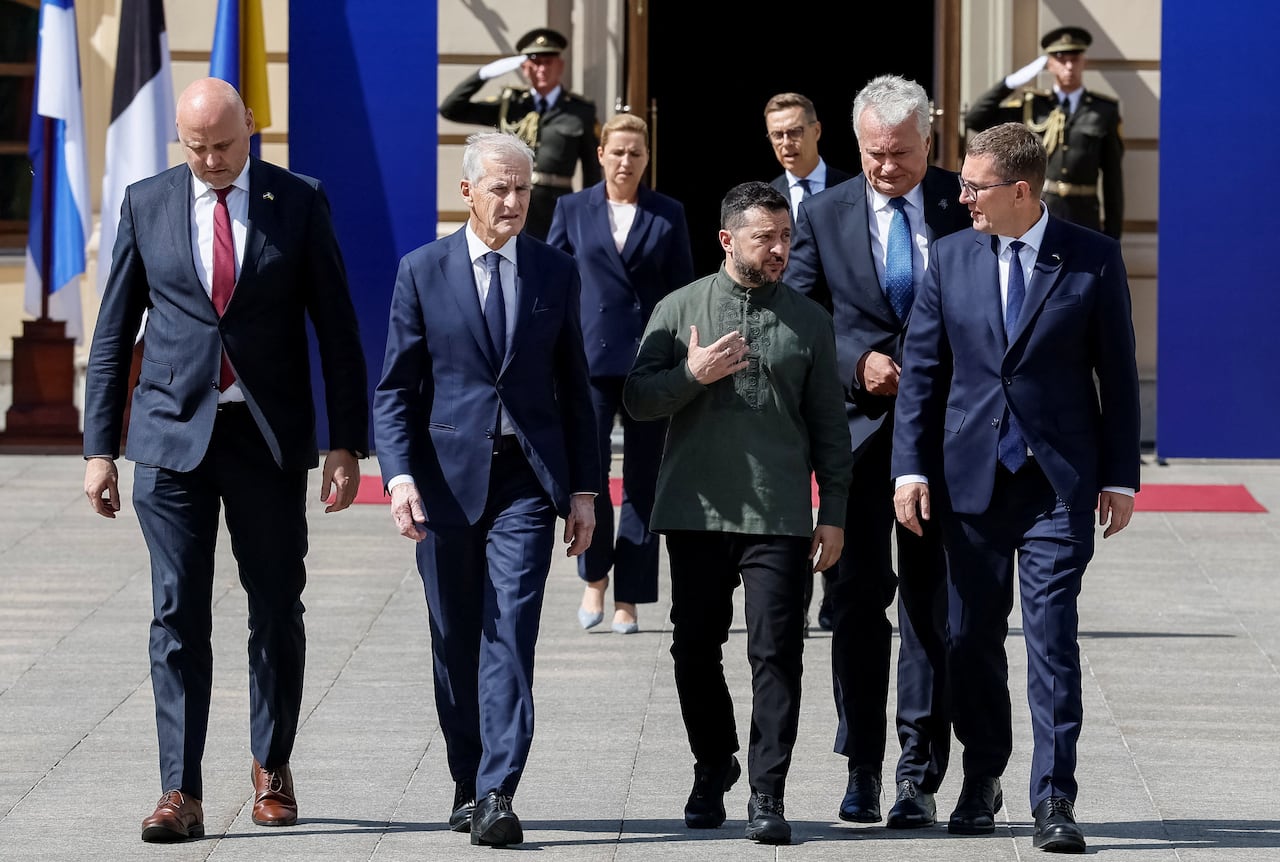
Leaders including Ukraine’s President Volodymyr Zelenskyy, Denmark’s Prime Minister Mette Frederiksen, Latvia’s Prime Minister Andris Kulbergs, Lithuania’s President Gitanas Nauseda, Finland’s President Alexander Stubb, Norway’s Prime Minister Jonas Gahr Stoere, and Estonia’s Prime Minister Kristen Michal participate in a family photo ceremony before a Ukraine-Nordic-Baltic summit (NB8) in Kyiv on Aug. 23. (Gleb Garanich/Reuters)
Kerry Buck, who previously served as Canada’s ambassador to NATO, indicated that Russia has aimed to dismantle the alliance since its annexation of Crimea in 2014, and the environment has only become more favorable since U.S. President Donald Trump took office last year.
The relentless criticism of allies, new financial demands placed on them, the reduction of U.S. forces designated for emergencies, and Washington’s reassessment of troop deployment in Europe have created conditions ripe for a significant political crisis, should provocations occur.
Buck described it as “a window of opportunity where Russia felt emboldened to challenge NATO more, probing NATO territory, airspace, and influence more.”
While she does not anticipate an outright attack on NATO, she believes Russia is ready to attempt something ambiguous.
“Do I believe they will execute something explicitly designed to disrupt NATO’s decision-making and political cohesion? Absolutely,” Buck asserted.
Trump expressed to reporters last week that he is “not concerned at all” about a potential Russian attack on NATO territory, stating that he has spoken with Putin, who assured him of no intentions to strike NATO land.
During a North Atlantic Council meeting in Brussels last week, U.S. defense policy chief Elbridge Colby affirmed that Washington is not withdrawing from its commitments in Europe. He emphasized the desire for a new vision of NATO centered on European-led conventional defense.
Buck noted that most of what Russia is likely planning remains below the threshold of a direct assault. She also takes Colby’s statements at face value, but her primary concern lies within the realm of NATO’s political dynamics.
Historically, the U.S. has stepped up to lead the allied response during crises. The question remains whether this will occur under the current administration.
“All indications from President Trump suggest a lower level of commitment than before, so who would take the lead in the preliminary response?” Buck questioned.
“And would that be impeded by U.S. reluctance? We are facing not only a potential lack of U.S. leadership but also the possibility of U.S. hesitation regarding whatever NATO may pursue or consider,” she added.
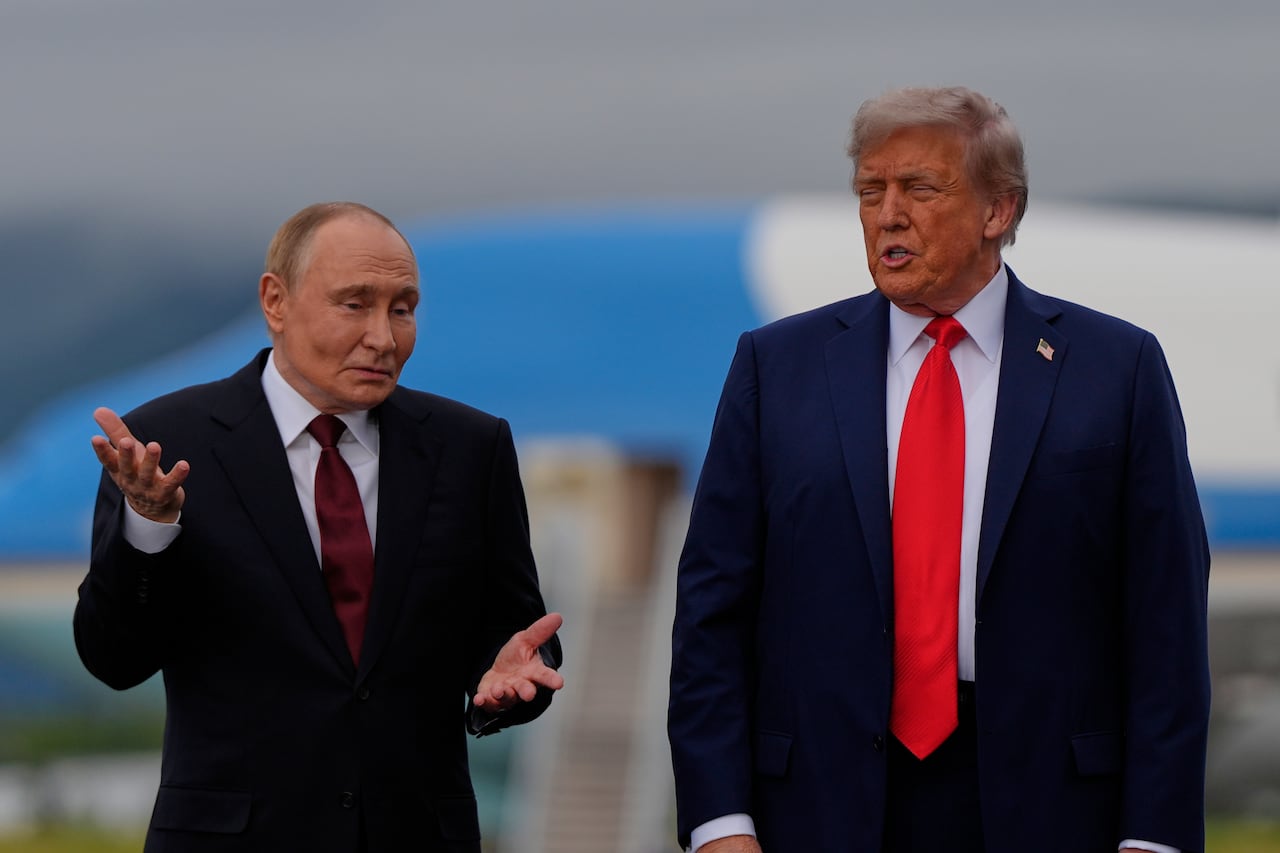
U.S. President Donald Trump and Russian President Vladimir Putin converse at Joint Base Elmendorf-Richardson in Alaska on April 15, 2025. (Julia Demaree Nikhinson/The Associated Press)
Recently, Lithuanian intelligence raised another alarming scenario: Russia might utilize captured Ukrainian drones in a false flag operation targeting a Baltic nation.
Lithuanian Defence Minister Robertas Kaunas disclosed that intelligence suggested Russia could deploy captured Ukrainian UAVs in an operation designed to make it appear as though Ukraine had attacked NATO territory.
The intention would be more political than military, aiming to create confusion within the alliance and undermine support for Kyiv. Russia has denied these claims.
However, this scenario gains credibility as a similar incident transpired in Latvia last spring.
Ukrainian strike drones have frequently entered NATO airspace, seemingly in some instances due to Russian electronic warfare disrupting their navigation systems.
The incident in Latvia led to a political crisis that resulted in the defense minister losing his position, and subsequently cost the prime minister her job.
Buck noted there are various concerning scenarios for Moscow to create disturbances.
“It is advantageous for them to act now,” she remarked. “And I do not believe NATO is adequately prepared to respond, particularly given the uncertainty regarding the U.S. response.”