


Welcome to our weekly update, where we showcase environmental developments and initiatives that are paving the way toward a more sustainable future.
Hi, this is Emily. I attended the Electricity Transformation Canada conference in Toronto last week, and one of the presentations that caught my attention focused on safeguarding bats from wind turbines.
This week:
- Wind turbines pose significant threats to bat populations. Here’s what can be done
- The Big Picture: Discovering creepy crawlies
- ‘Second-hand fashion at its finest’: Thrift shop hosts charity fashion event
Wind turbines pose significant threats to bat populations. Here’s what can be done

The eastern red bat is one of three migratory bat species in Canada facing a high risk of fatalities due to wind turbines. The bat shown in the picture is equipped with a tracking transmitter and antenna. (Brock Fenton)
While wind turbines are generally seen as a green alternative for electricity generation, they can be particularly lethal for bats — recent research revealed that wind turbines in the U.S. are responsible for the deaths of nearly 18.7 million bats from 1981 to 2024, with this figure escalating to approximately 1.5 million bats annually by 2021 due to the growth of wind energy.
In Canada, the situation is equally alarming, particularly concerning our three migratory bat species: A 2023 scientific evaluation indicated that the hoary bat, eastern red bat, and silver-haired bat all confront a “high risk of fatalities at wind energy facilities.”
The primary evidence? A decline in the number of dead bats discovered beneath wind turbines, which are either killed by collisions or by the significant pressure fluctuations occurring near the blades.
Dana Green, a biologist who contributed to the assessment, noted that bats do not appear to be learning to avoid these dangers. Consequently, the reduced number of dead bats suggests a dwindling population — the report has recommended that they be designated as federally endangered.
Scientific forecasts indicate that “fatalities linked to wind energy facilities” could result in a 90 percent reduction in the hoary bat population over 50 years, alongside a 22 percent chance of extinction over the next century.
Not all bat species are equally affected by wind turbines. Many of Canada’s bat species are small, brown bats that hibernate locally and face minimal risks from turbines (though they have been severely impacted by a lethal disease known as white-nose syndrome).

Biologist Dana Green holds a hoary bat during field research in Saskatchewan. (Submitted by Dana Green)
It is the three more vividly colored migratory species that tend to suffer fatalities from wind turbines during their autumn migrations to hibernate in the southern U.S. and Mexico.
During this time, they traverse broad migratory routes where wind turbines are frequently situated.
Green, a postdoctoral researcher at the University of Northern British Columbia, mentioned that hoary bats, the largest bat species in Canada, seem to be drawn to turbines, although the reasons remain unclear.
What can be done to help?
The primary approach for bat conservation is “curtailment,” which involves turning off wind turbines at specific times when bats are in danger.
In Ontario, these regulations take effect for a wind farm if bat fatalities exceed 10 per turbine annually.
Typically, wind turbines begin operation at wind speeds of three or four meters per second. However, from sunset to sunrise between July 15 and September 30, they are prohibited from operating if wind speeds are below 5.5 meters per second, as bats tend to fly more in less windy conditions.
Due to the power and revenue loss associated with this “blanket” curtailment, more specific solutions have also been devised.

Wind turbines in Elmira, P.E.I. Various strategies can be employed to protect bats from fatalities caused by wind turbines, such as ceasing operations at night during the fall migration. (Aaron Adetuyi/CBC )
“Smart” curtailment employs ultrasonic microphones to detect bats and automatically shut down one or more nearby turbines.
At the Electricity Transformation Canada conference in Toronto last week, Andrew Taylor, a senior ecologist at Stantec Consulting, mentioned that smart curtailment can be costly due to the need for numerous detectors. Depending on how far the detectors can reach, there is a risk that the bat could be in danger before the curtailment is activated — a concern that also troubles Green.
Taylor pointed out that smart curtailment can complicate predictions for wind companies regarding potential energy and revenue losses from temporary shutdowns.
He proposed a solution created by his firm, which involves utilizing fewer detectors to monitor bats over a year, correlating the bat population with wind and weather patterns, and then using this information to optimize turbine shutdown timing.
“We like to believe that we’re allowing the bats to inform us when to curtail,” he explained.
Ian Maynard, a research engineer at a Natural Resources Canada lab focused on renewable energy, recently analyzed 51 scientific studies on reducing bat fatalities from wind turbines along with some of his own modeling in Ontario.
Maynard mentioned that the difference in annual electricity production and revenue between smart and blanket curtailment is only around two to three percent, meaning the more advanced solution may not always be justifiable.
Some research has explored using sounds, colors, or lighting to deter bats in place of curtailment. He noted that there is considerable interest in the use of ultrasonic sounds to repel bats, but their effectiveness can vary based on location and bat species.
He observed that many studies aimed at mitigating bat fatalities from turbines lacked sufficient transparency for reproducibility, indicating the need for more Canadian studies with a larger number of turbines to acquire reliable data.
“There should be a range of options available,” he stated. However, he emphasized that robust scientific evidence is necessary before policies can endorse these methods. “That’s essentially the next step.”
Currently, Green advocates for a nationwide curtailment policy across Canada.
She believes that while green energy is “fantastic,” and is confident that wind energy and migratory bats can coexist, wind developers must enhance their efforts to protect bats. “If green energy wants to promote itself as environmentally friendly, then they need to back up their claims with action.”
—Emily Chung

Previous editions of What on Earth? can be found here. You can access the CBC News climate page here.
Be sure to check out our podcast and radio show. In our latest episode: Sixty-five bats perished inside a specially built home designed for their safety. What went wrong? For bat mothers searching for a place to raise their young, the issue isn’t just the rent, it’s the excessive heat. However, bat enthusiasts are working on constructing safer shelters, from small condos with emergency exits to tiny bark roosts affixed to trees.
What On Earth? releases new podcast episodes every Wednesday and Saturday. They can be accessed on your preferred podcast platform or on demand at CBC Listen. The radio show broadcasts Sundays at 11 a.m., and at 11:30 a.m. in Newfoundland and Labrador.
Visit the CBC News Climate Dashboard for real-time updates on extreme weather and current conditions across the nation. Set your location to compare today’s temperatures with historical averages.

(CBC)
Reader feedback
What are your strategies for being more environmentally friendly this autumn and Halloween? We would love to hear your suggestions and see your pictures.
Have questions, comments, or want to share something? Reach out to us at whatonearth@cbc.ca (and feel free to include photos!)
The Big Picture: Discovering creepy crawlies

(Dara Ojo)
This remarkable green and orange creature is a huntsman spider captured in Jiaxing, Zhejiang Province, China, by Edmonton-based photographer Dara Ojo.
He mentions that his spider photographs often elicit strong reactions from viewers, particularly those who are arachnophobic. However, he aspires to shift their perspective through a closer examination.
“Seeing their faces allows us to connect with them on a personal level,” he expressed.
During Halloween, enormous spiders and webs embellish neighborhoods to frighten trick-or-treaters. Ojo believes such decorations reinforce the notion that spiders are terrifying — a perception he aims to challenge with his upcoming book, Tiny Titans.
“I strive to alleviate people’s fears,” stated Ojo, whose book showcases 120 close-up portraits of insects and spiders from Canada, China, Costa Rica, and Nigeria, his country of origin. He hopes that observing these creatures up close will foster empathy and encourage people to assist them by planting native flowers.
The book is set to be released in bookstores across Canada on November 10.
— Emily Chung
Hot and bothered: Intriguing ideas from around the web
- The first climate lawsuit to go to a full trial in Canada commenced hearings in Vancouver this week. Its outcome could establish new constitutional precedents in Canada and motivate climate litigation globally.
- The re-election of Luiz Inácio Lula da Silva as Brazil’s president has been met with a great relief for the Amazon rainforest. Lula has intensified efforts against deforestation in the Amazon, which was otherwise threatened with severe collapse.
- On Haida Gwaii, logging has removed the trees that bears used as habitats. Now, the Haida Nation is creating new dens for them, as reported by The Narwhal.
- The world’s largest electric ferry is now operational, capable of transporting up to 225 cars and 2,100 passengers at once between Buenos Aires, Argentina, and Colonia, Uruguay. You can read more about electric ferries in Canada in a CBC article from April.
‘Second-hand fashion at its finest’: Thrift shop hosts charity fashion event

The fashion event was a collaborative effort between the Dawson City Thrift Store and the Willow Foundation Dawson City to generate funds for the community. (Hyunjung Kim/CBC)
If you’ve ever found it challenging to style thrifted items, an event in Dawson City, Yukon, may offer some inspiration.
The local thrift shop hosted its inaugural fashion show last Friday in its more than 40-year history.
Approximately 20 volunteer models — including children — strutted down the runway showcasing a variety of imaginative second-hand outfits.
This event was organized collaboratively by the Dawson City Thrift Store and the Willow Foundation Dawson City to raise community funds.
Gaby Sgaga shared that she chose to volunteer as a model to support familiar organizers — but also for the unique opportunity it provided.
“Who wouldn’t want to be a runway model?” Sgaga remarked. “And it’s for a noble cause, so it’s a win-win.”

Gaby Sgaga showcased two outfits. Her second ensemble combines glitter with a lumberjack jacket under the theme ‘glitz and casual.’ (Hyunjung Kim/CBC)
Most of Sgaga’s attire is second-hand, as she values the importance of recycling.
“You can genuinely discover high-quality clothing second-hand, and you are also benefiting people and the planet,” Sgaga expressed.
For Sandy Jung, whose passion is cosplay, the runway felt familiar. Conversely, for Amandeep Kaur, it was a nerve-wracking experience. Nevertheless, she cherished the rare opportunity to showcase her fashion in Dawson.
“I hesitate to wear high heels outside on the street… but here is the chance to wear these shoes. I love my dress and feel beautiful,” Kaur shared.

Amandeep Kaur, left, and Sandy Jung pose at the Dawson City Thrift Store Fashion Show. Jung mentioned she would like to participate again next year if given the opportunity. (Hyunjung Kim/CBC)
Nine-year-old Esmé Winton and eight-year-old Olive Dewell stole the spotlight, although they admitted to feeling nervous at first.
The two friends selected their outfits from the thrift store and have already developed their own unique styles.
“When my mom picks my outfit, I always change it,” Winton stated.
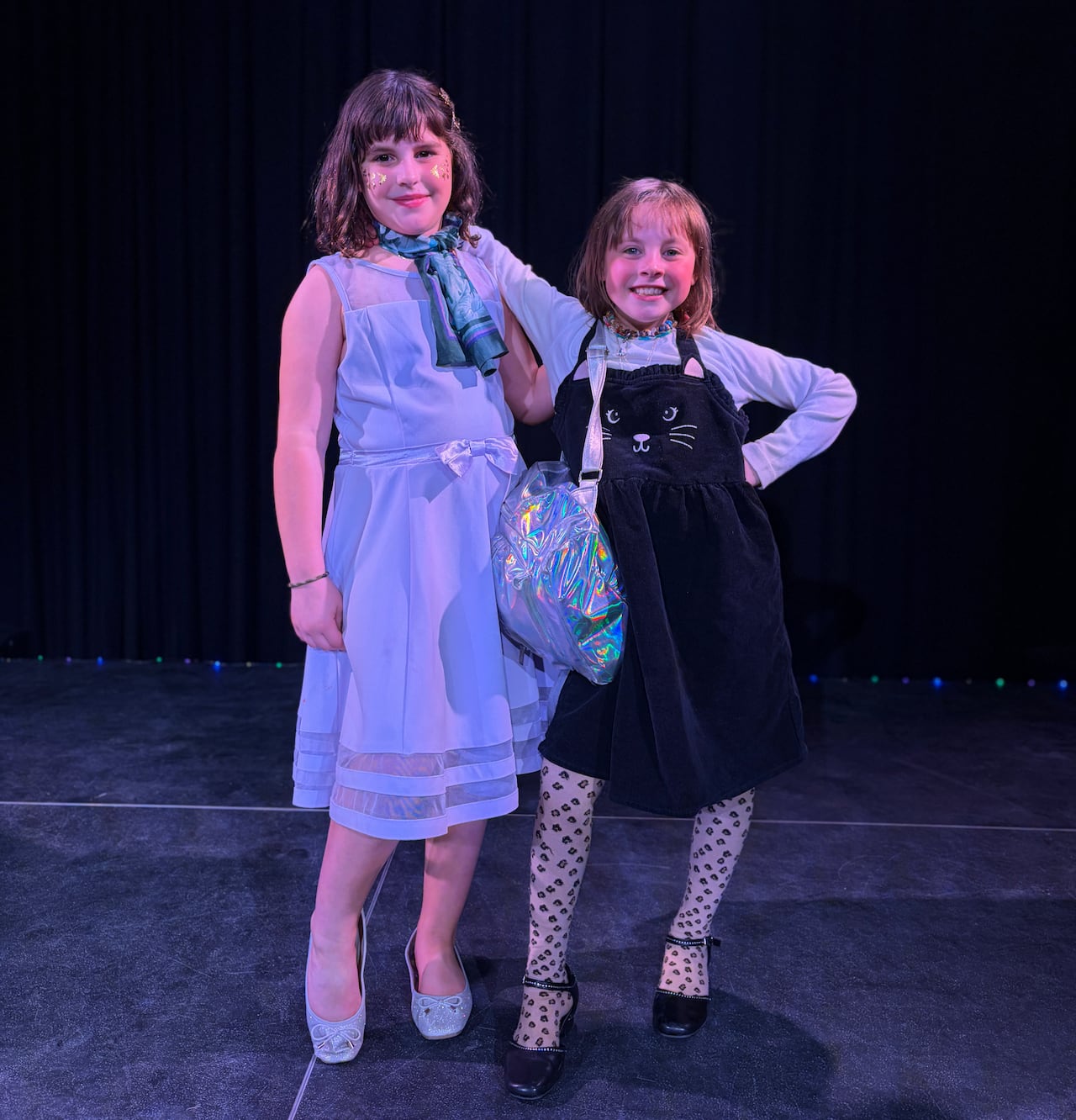
Olive Dewell, left, and Esmé Winton, right, pose at the fashion show. Winton found the experience thrilling, noting that she always appreciates the chance to perform due to her love for acting. (Hyunjung Kim/CBC)
One of the event’s coordinators, River Doucette, stated that the show empowered the participating models.
“And that’s exactly what we aimed for, right?” Doucette remarked.
“We want the community to come together and enjoy a wonderful evening, especially as the weather becomes colder.”
A live auction
The fashion show featured live auctions where attendees raised paddles while models paraded on the runway.
Leah Payne was among the most active bidders.
“I don’t often get to the thrift store because I’m usually unavailable during its operating hours. So this is an enjoyable way to see some of their offerings,” Payne commented.
Natasha Henderson won a leopard print jacket and is eager to see how she can style “this amazing vintage piece of clothing from Canadian history.”
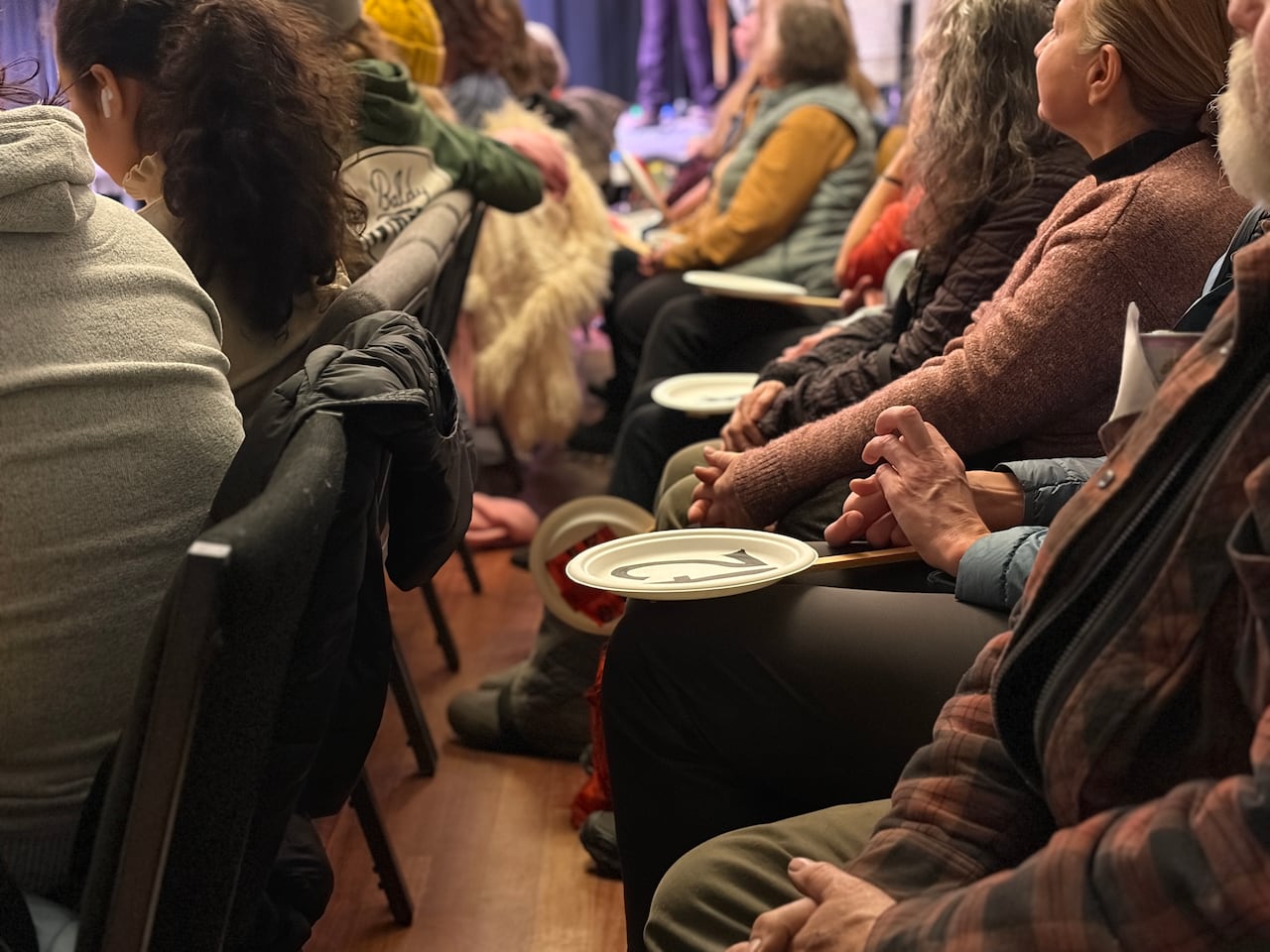
An audience of around 100 individuals raised auction paddles for the models’ outfits. (Hyunjung Kim/CBC)
For Henderson, who is the deacon of St. Paul’s Church closely associated with the thrift store, every piece of clothing carries a narrative.
“Each item has been worn by someone else, somewhere else, and has found its way here,” she reflected.
“It’s truly wonderful to be part of that garment’s journey.”
Thank you for reading. If you have inquiries, feedback or story ideas, please direct them to whatonearth@cbc.ca.
What on Earth? arrives directly in your inbox every Thursday.
Editor: Emily Chung | Logo design: Sködt McNalty