

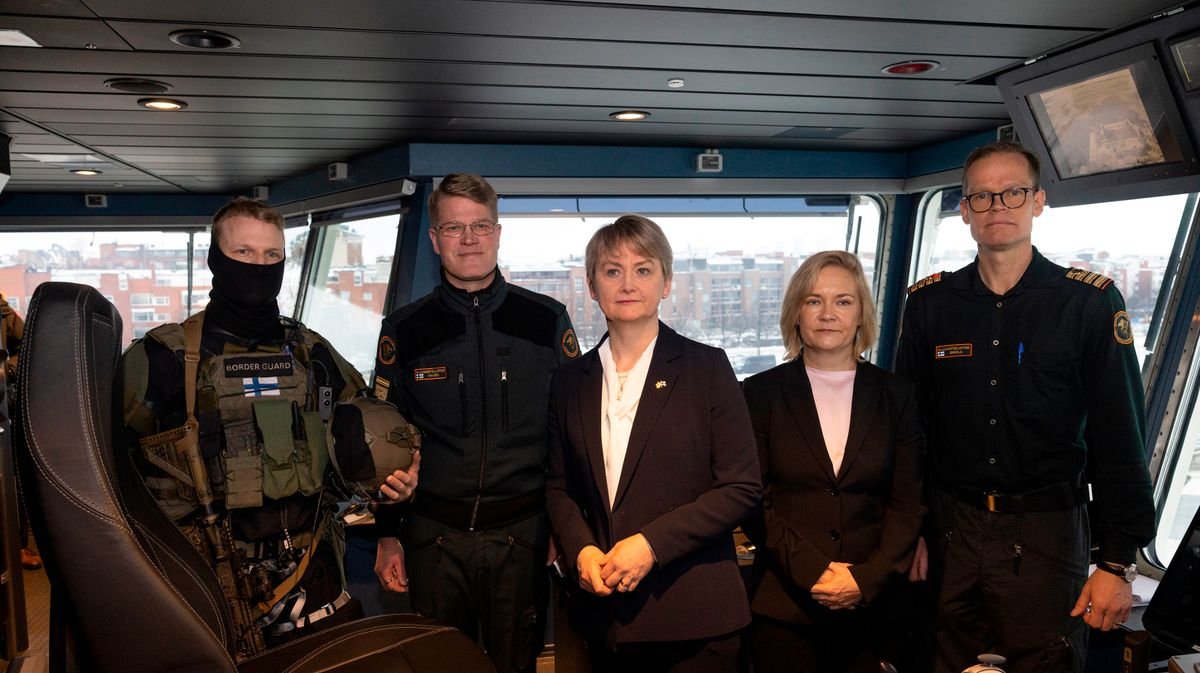

As I gazed at the deck of the Finnish patrol vessel, a group of armed individuals descended from a helicopter and initiated a rapid takeover of the ship.
The masked guards swiftly advanced to the ship’s control center, vocally asserting their authority. Fortunately, it was merely a practice exercise conducted by the Finnish Border Guard, tasked with safeguarding an 830-mile border along NATO’s eastern frontier against Russia. The unit actively engages with Putin’s clandestine maritime fleet in the Gulf of Finland and conducts operations on suspicious vessels suspected of interfering with vital undersea cables.
Demonstrating their readiness to apprehend a suspect vessel, camouflaged personnel showcased their tactics to Foreign Secretary Yvette Cooper during her recent visit to Finland and Norway. Boarding the Turva, an offshore patrol vessel in Helsinki, offered a close view of the Gulf of Finland, extending towards St Petersburg, the easternmost point of the Baltic Sea.
Within close proximity to Russia, the Finnish authorities are constantly challenged by Putin’s disruptive strategies and unconventional warfare tactics. Secretary Cooper’s visit underscored the imminent threat posed by the Russian shadow fleet to the UK.
In an exclusive interview, Secretary Cooper emphasized the necessity for decisive action to counter the network of aging oil tankers operating under questionable flags. These vessels not only circumvent Western sanctions, indirectly funding Putin’s activities in Ukraine but are also accused of sabotaging critical undersea cables crucial for telecommunications and energy supplies like electricity, oil, and gas.
The UK is reportedly exploring legal options to authorize military interventions for boarding such vessels, following recent assistance provided to US special forces in a daring operation against a tanker linked to Russia. The escalating tensions in the Arctic region have been heightened by climate change-induced melting ice, leading to territorial disputes and resource exploitation.
The UK aims to demonstrate its commitment to collaborating with NATO allies in securing the High North region. However, potential disruptions by US President Trump, particularly concerning Greenland’s territorial status, could jeopardize these efforts.