

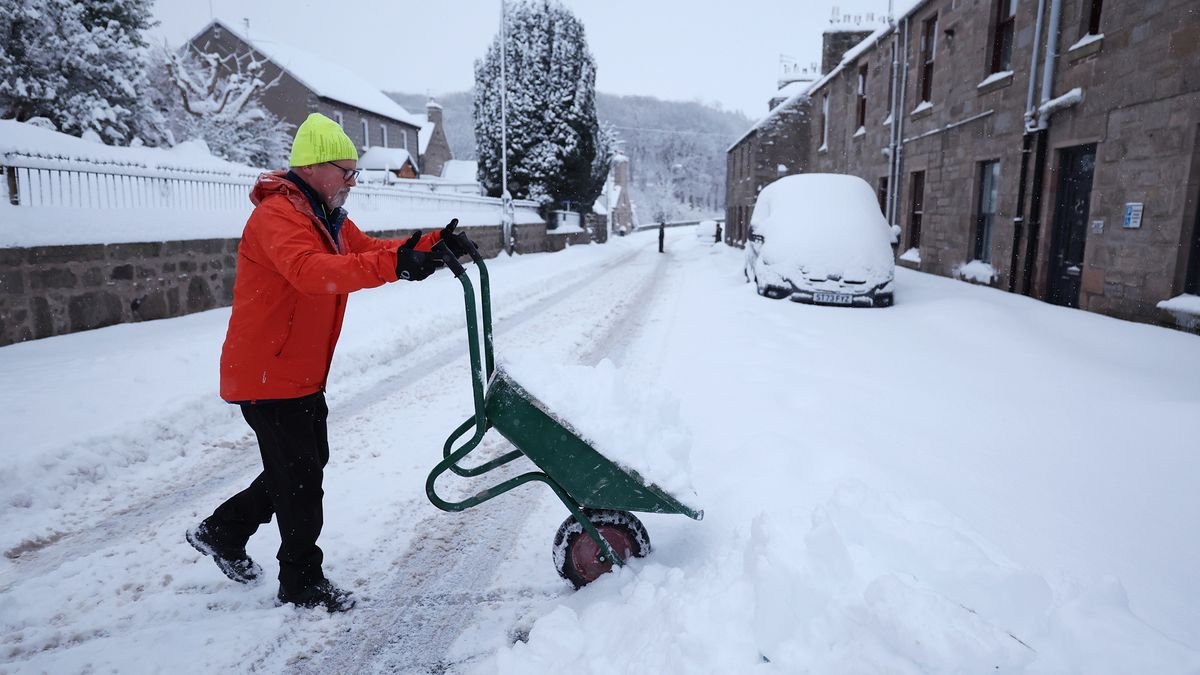

Britons are bracing for a new wave of snowfall as over 60 centimeters of snow blankets the country in a bone-chilling Arctic freeze of -14 degrees Celsius.
The nation is currently gripped by a cold snap, with widespread weather advisories for icy conditions and snowfall across the country extending until tomorrow. In addition to heavy snowfall, temperatures have plummeted well below freezing, with the coldest recorded temperature at Shap in Cumbria dropping to -10.9 degrees Celsius on Sunday night.
Forecasts indicate that temperatures could further nosedive later this week as Arctic air continues its southward trajectory, colliding with low-pressure systems moving in from the Atlantic laden with moisture, resulting in significant snowfall.
A WXCharts forecast for 9 pm on Thursday illustrates a low-pressure system positioned just off the southwest coast of England, ushering in heavy rainfall in the south and snow flurries in northern England.
This low-pressure system is anticipated to move inland overnight into Friday, generating snowfall across southern England throughout the day. Central Scotland is expected to receive more than 60 centimeters of snow, enveloping most of the region in a wintry blanket.
A broad swath of snow is predicted to sweep through southern England, potentially accumulating to depths exceeding 20 centimeters.
The wintry conditions are set to persist into Saturday, with bitter cold prevailing, especially in the north. Temperature readings are projected to plunge to -14 degrees Celsius in Scotland by midday Saturday, and -9 degrees Celsius in northern England, while southern regions are expected to hover around a mere 1 degree Celsius.
Chief Meteorologist at the Met Office, Matthew Lehnert, warned of a variety of winter weather hazards in the upcoming days, including low temperatures, snow showers, and the risk of icy conditions. Several severe weather alerts have been issued and are likely to be updated, urging the public to stay informed about the evolving forecast.
The national weather agency has also cautioned about the potential impact of strong winds and heavy precipitation later in the week, highlighting uncertainties regarding the exact positioning of the low-pressure system. Deputy Chief Meteorologist, Mike Silverstone, emphasized the importance of staying updated with the weather forecast as the situation evolves to better understand the potential weather impacts across different regions.