

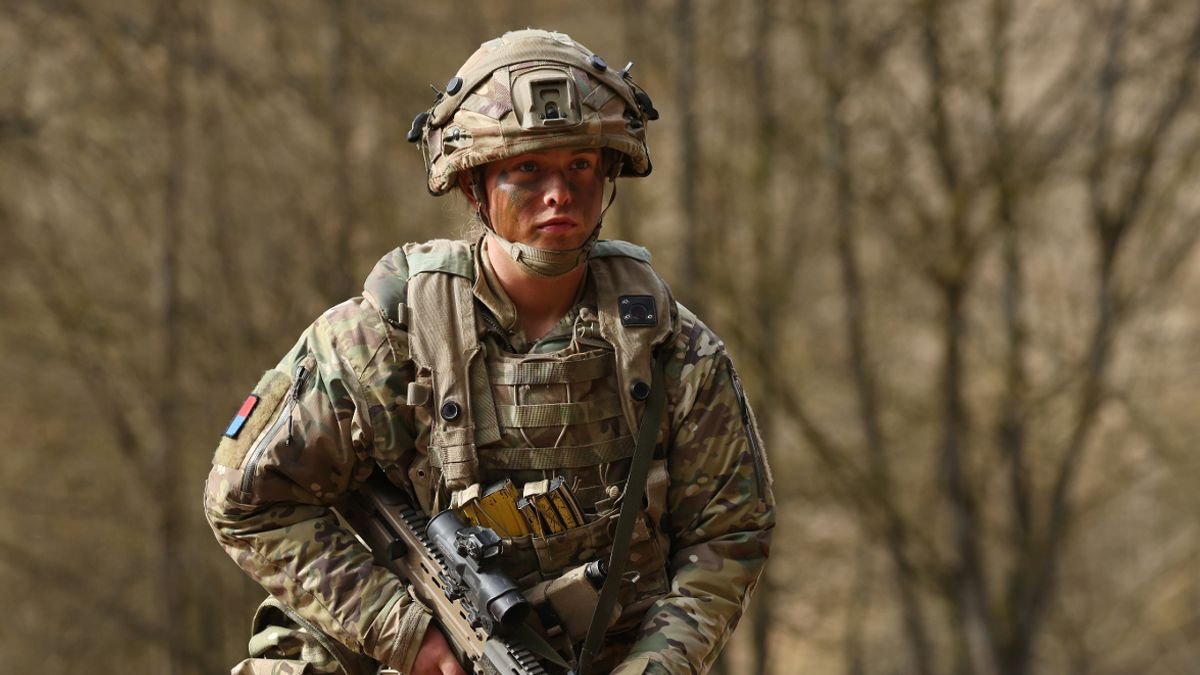

In light of escalating concerns over Vladimir Putin’s potential escalation of conflict in Europe, British citizens are being advised to brace themselves for a scale of warfare akin to that endured by their forebears. The looming question is how such a scenario would manifest within the UK.
Despite Prime Minister Keir Starmer’s prior assurance that conscription was not under consideration in Britain, there are apprehensions among experts regarding the adequacy of army personnel in the event of a war outbreak. Anthony Professor Glees, a European affairs specialist from The University of Buckingham, noted the critical yet overlooked strategy of bolstering the armed forces through conscription as a cost-effective measure against various threats to the nation.
According to the latest National Security Strategy report, the contemporary landscape of nuclear weapons poses a complexity surpassing even that of the Cold War era. This unsettling revelation underscores the radical uncertainty gripping the nation, prompting Prime Minister Keir Starmer’s commitment to allocate five percent of GDP to national security within ten years, aiming to align civilian and military interests as not witnessed since 1945.
If conscription were to be implemented in the UK, certain occupational categories might be exempt, but overall, a collective effort would be encouraged. While the historical precedent in the UK has never mandated women for direct combat roles, recent surveys indicate a public consensus favoring gender-inclusive conscription in the hypothetical scenario of a World War III scenario.
During World War II, Britain mobilized its populace through National Service enlistment, targeting men aged 18 to 41 initially, followed by single women and childless widows aged 20 to 30. The war effort engaged a significant proportion of the population in essential roles, with exemptions granted to the medically unfit and individuals in pivotal industries like farming and medicine. As the conflict progressed, the age brackets for conscription widened, ensuring a comprehensive societal contribution to civil defense.
Post-war, the mandatory enlistment scheme was phased out, transitioning the armed forces to a volunteer-based structure. The National Service system persisted until May 1963, marking the discharge of the final serviceman. Notably, the removal of gender restrictions in 2018 enabled women to access all military roles, including combat positions and service in the Royal Marines.
In contemporary Britain, government initiatives are exploring innovative recruitment strategies to attract young individuals to military service. An upcoming program, scheduled to launch in March 2026, proposes a ‘gap year’ military scheme targeting under-25s. This scheme, modeled after an Australian counterpart, aims to enhance army recruitment and equip youth with valuable life skills amid geopolitical tensions, particularly concerning Russian threats.
The prospective gap year initiative is anticipated to receive favorable reception, particularly among proponents of national conscription like Professor Anthony Glees. This renewed discourse on conscription follows the release of the National Security Strategy report, highlighting the evolving nuclear threat landscape and the imperative for proactive defense measures.
While the notion of conscription has long sparked debates, successive governments have refrained from endorsing military conscription, emphasizing the efficacy of volunteer-based armed forces. However, evolving global security dynamics have reignited calls for National Service as a crucial national defense component.
Professor Glees emphasized the deterrent potential of a well-trained UK land army comprising motivated young individuals in deterring aggression, citing the limitations of nuclear deterrence observed in recent geopolitical conflicts. The ominous warnings from Putin’s propagandists, forecasting potential nuclear strikes on European capitals and Britain, have reignited concerns of a broader conflict with far-reaching implications.