

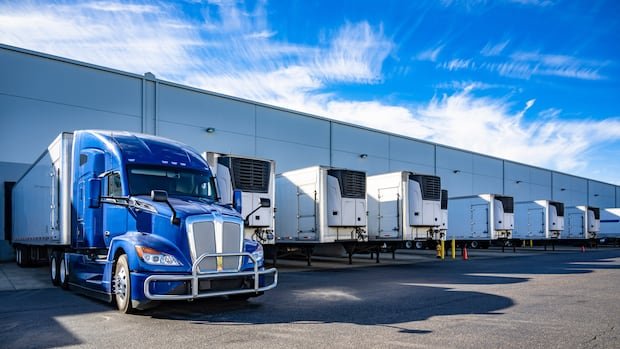

Canadians preparing for significant counter-tariffs are likely to experience price hikes not only on American aluminum, toilet paper, and furniture but also on the semi-trailers used to transport these goods across and within the country. Ocean Trailer, the primary semi-trailer retailer in Western Canada, is awaiting the delivery of 600 trailers worth $45 million from U.S. manufacturers. With a 25% Canadian counter-tariff set to go into effect soon, the company is hurrying to get as many trailers across the border before the deadline.
Mack Keay, the chief operating officer of Ocean Trailer, mentioned that the additional 25% cost exceeds their profit margin on a trailer, forcing them to pass on the increase to customers. This tariff retaliation by the Canadian government, amounting to $27.6 billion on U.S. goods, is in response to the recent tariff actions by President Donald Trump’s administration.
Keay expressed the possibility of canceling some orders, but trailers already in production in the U.S. cannot be altered. The inability to bring these trailers into Canada before the tariff deadline will result in additional costs or potential loss if sold to American retailers.
The Manitoba Trucking Association highlighted concerns shared by many in the industry, emphasizing that most semi-trailers in Canada are sourced from the U.S. The impending counter-tariffs pose financial challenges for businesses that had placed orders before the tariff announcement.
Two common types of semi-trailers, dry vans, and refrigerated vans, are extensively used in Canada for transporting various goods. The scarcity of domestic semi-trailer manufacturing in Canada raises worries about meeting the increased demand post-tariffs.
The potential rise in costs due to tariffs could have a significant impact across the industry. Keay pointed out that the average cost of trailers, currently at about $75,000, could escalate to around $95,000 with the added tariffs. The surge in demand for trailers might lead to shortages, driving up costs and ultimately affecting consumer goods prices.
Overall, the industry faces uncertainty as semi-trailer sales fluctuate yearly, influenced by shifting supply and demand dynamics. The reliance on a diversified supplier base, including U.S. and Mexican suppliers, underscores the industry’s interconnectedness and vulnerability to trade disruptions.
In conclusion, the trucking sector anticipates challenges ahead, especially if the tariff conflicts persist. The potential repercussions include financial strain on companies within and beyond the trucking industry, emphasizing the need for swift resolution to avoid long-term disruptions.