

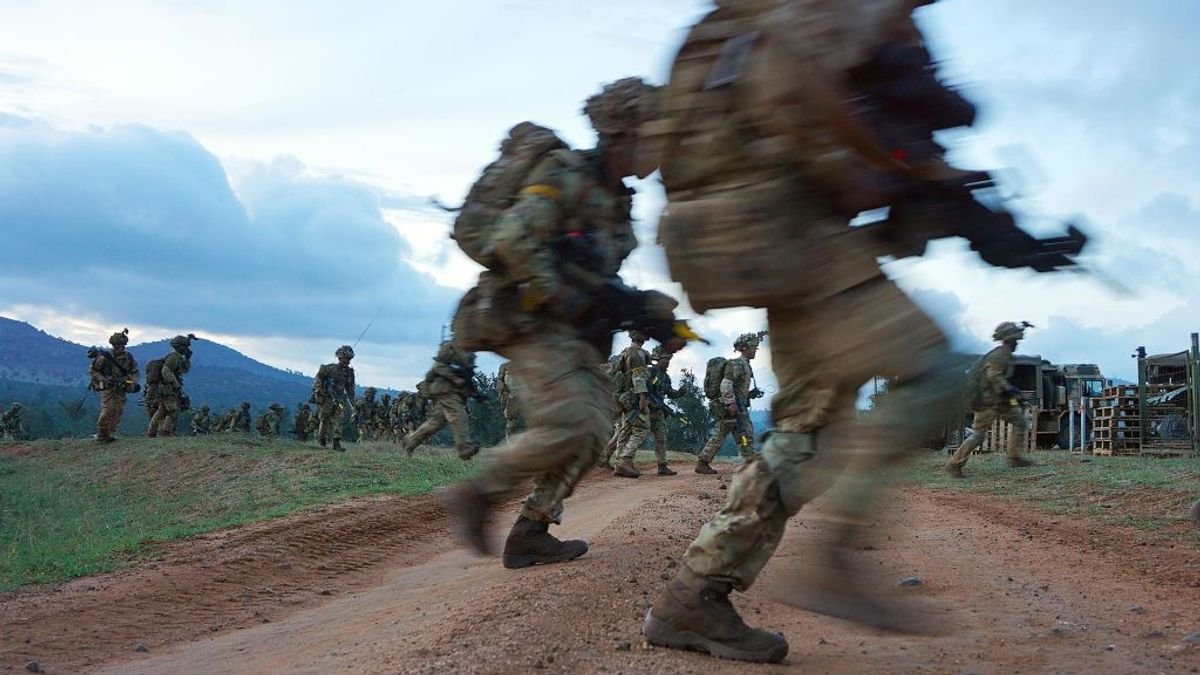

The emergence of ‘gap year soldiers’ being trained for combat zones has sparked discussions on potential conscription in the UK in 2026. An expert’s insights shed light on what this scenario might entail. Scheduled for recruitment in March 2026, individuals under 25 could enroll in a new military program resembling Australia’s initiative, aimed at enhancing army recruitment and fostering life skills amidst concerns over Russian threats. The program is set to commence with a modest group of 150, with aspirations to increase this number to over 1,000 annually.
Participants will be exposed to military life and gain transferable skills, with no obligation to enlist full-time. Those opting to continue with the Armed Forces can receive additional training for operational deployments. Meanwhile, recent developments involving Russia’s rejection of a peace deal in Ukraine and alarming statements regarding British soldiers as potential targets have raised tensions.
The proposed gap year scheme, outlined in the iPaper, has garnered support from experts like Professor Anthony Glees, who advocates for national conscription following the National Security Strategy report release. Despite the report’s focus on complex nuclear threats, it overlooked conscription, a decision Professor Glees finds concerning. He stresses the importance of bolstering armed forces through conscription to address various threats effectively.
While historical debates have rejected military conscription in favor of voluntary enlistment, shifting global security dynamics prompt reconsideration of the necessity of National Service. Professor Glees emphasizes the value of conscription for enhancing national defense capabilities and believes incentives like cheap loans, free education, and a renewed sense of duty can make it appealing to the youth.
The planned scheme aims to expand gradually, with regular evaluations to assess its impact on recruitment and operational effectiveness. It is envisioned as an attractive opportunity for young individuals seeking career direction or skill development beyond military service. Notably, the program’s duration, structure, and compensation details are yet to be finalized.
In light of ongoing geopolitical tensions, Professor Glees underscores the significance of conventional military strength over nuclear deterrence. He emphasizes the need for a robust land army to safeguard national security and argues that future conflicts in Europe are more likely to involve conventional warfare rather than nuclear escalation.
The proposed Army scheme is slated for a two-year duration, beginning with a foundational training phase followed by specialization. While the Navy and RAF are also exploring similar gap year initiatives, details on their specific programs are pending. Reflecting on past conscription practices during World War I and World War II, the evolution of National Service in the UK underscores the changing landscape of military recruitment and national defense strategies.